The digital shelves of the Xbox One's vast backwards compatibility library received a fresh delivery. Larry Hyrb, a familiar voice from Microsoft's Xbox team, made the announcement that stirred the hearts of preservationists and nostalgic gamers alike. Five new titles, a blend of a major blockbuster and cherished digital gems, were cleared for takeoff on the modern console. The headliner was unmistakable: the colonial-era epic Assassin's Creed III. It was joined by four Xbox Live Arcade classics: the charming puzzle adventure ilomilo, the parody shooter Matt Hazard: Blood Bath and Beyond, the stealth-action of Shadow Assault/Tenchu, and the side-scrolling ninja revival Shinobi. For players holding onto their digital libraries, it was a welcome expansion of the gaming horizon.
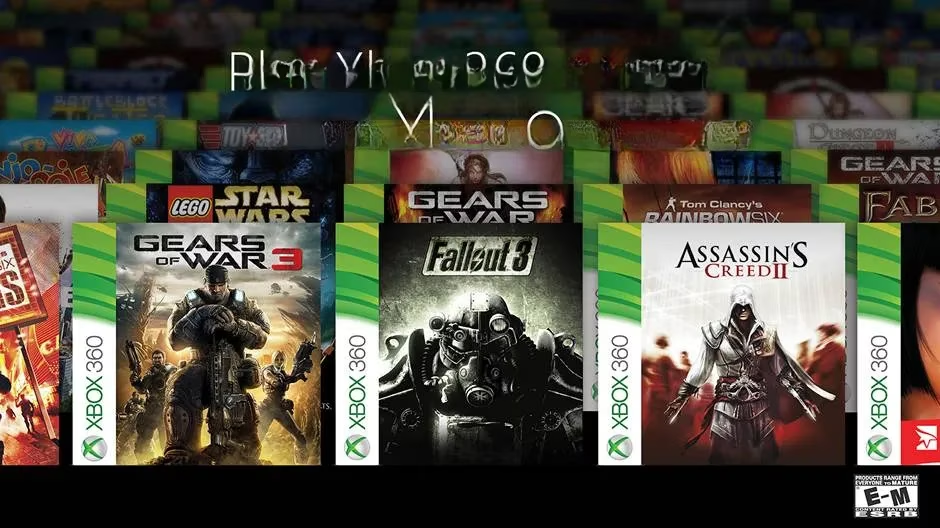
Each title brought its own unique history and price point to the service. The flagship addition, Assassin's Creed III, carried a premium tag reflective of its scale. The Arcade titles offered more budget-friendly journeys into distinct genres. The pricing structure was straightforward:
| Title | Price | Original Release Date |
|---|---|---|
| Assassin's Creed III | $19.99 | October 30, 2012 |
| ilomilo | $4.99 | November 3, 2010 |
| Matt Hazard: Blood Bath and Beyond | $9.99 | January 6, 2010 |
| Shadow Assault/Tenchu | $9.99 | October 8, 2008 |
| Shinobi | $4.99 | June 10, 2009 |
For subscribers of Xbox Live Gold, the news was particularly sweet. Assassin's Creed III was slated to be part of the Games with Gold program for that very month. This meant members could add Connor Kenway's saga to their permanent collection at no extra cost during a specific window, a fantastic value proposition that highlighted Microsoft's commitment to rewarding its loyal player base.
The inclusion of ilomilo was a quiet triumph for fans of atmospheric puzzle games. Its cooperative play and adorable aesthetic had cultivated a dedicated following. Conversely, Matt Hazard: Blood Bath and Beyond offered a dose of meta-humor and over-the-top action, a loving spoof of gaming tropes. The two ninja-themed titles, Shadow Assault/Tenchu and Shinobi, catered to players yearning for precise stealth and challenging, classic-style action-platforming, respectively.
This drop was another brick in the formidable wall of backwards compatibility that Microsoft had been building. By this point, the list of playable Xbox 360 and original Xbox games on the Xbox One had swelled to over 300 titles. It wasn't just about playing old games; it was about preserving digital purchases and respecting the player's investment and history. The service acted as a bridge between generations, allowing communities to persist and classic experiences to find new audiences without the need for older hardware cluttering up entertainment centers.
The strategy was clear: empower the player's existing library. While other platforms often required re-purchases or subscription-limited access to legacy content, Xbox's approach was more consumer-friendly. If you owned it digitally, you could likely play it. This philosophy fostered tremendous goodwill. For new Xbox owners in 2026, diving into this extensive catalogue is like walking into a vast, interactive museum of gaming from the 2000s and early 2010s, with titles like these five serving as curated exhibits.
Looking back from 2026, this particular update was a microcosm of the program's strengths. It mixed a major AAA release with smaller, cult-classic digital titles, ensuring there was something for different tastes. It leveraged the Games with Gold program to maximize value. Most importantly, it continued the steady, reliable drumbeat of support that defined the platform's ecosystem for years. The ability to seamlessly jump from the latest 2026 graphical showcase to a quirky 2008 puzzle game or a 2012 open-world adventure remains a uniquely compelling feature of the Xbox environment, a legacy built one backwards-compatible title at a time.