In the sprawling, meticulously crafted world of video game development, sometimes the best-laid plans go out the window, and a character emerges not from a grand design, but from a necessity to complete the fantasy. That's exactly the origin story of Yasuke, the hulking samurai who stands shoulder-to-shoulder with the shinobi Naoe in Assassin's Creed Shadows. Back in the game's conceptual phase, the idea was to have a single protagonist—a stealthy shinobi navigating the shadows of Feudal Japan. The samurai fantasy, that iconic image of honorable, face-to-face combat, was initially lighter, taking a backseat. But as creative director Jonathan Dumont and the team at Ubisoft dove deeper, they hit a snag. Trying to merge the shinobi and samurai into one "stealth tank" character was, in Dumont's words, "diluting the fantasy." It was like trying to make a ninja wear full plate armor—cool in theory, but a total mess in practice. The team realized they needed to go big or go home, and thus, the unplanned samurai, Yasuke, was born.
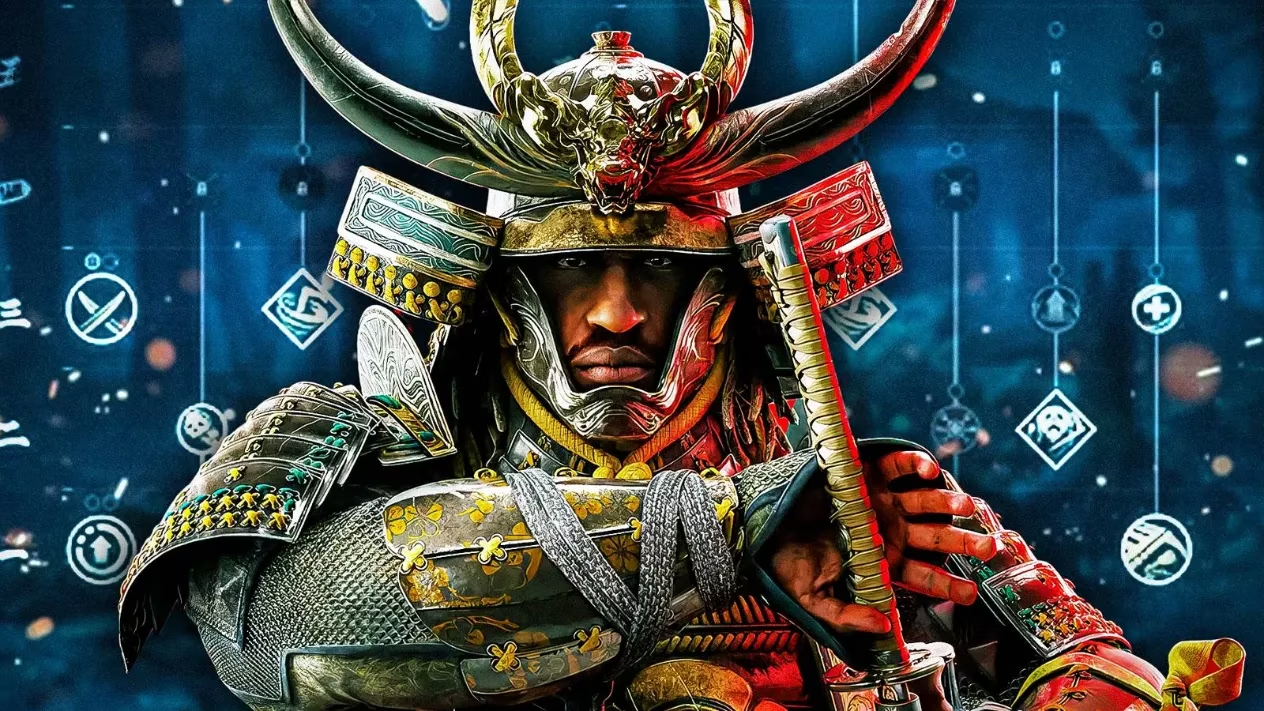
From Concept to Katana: The Birth of a Dual Protagonist System
The decision to add Yasuke wasn't just a whim; it was a fundamental shift in the game's DNA. Dumont explained that before full production kicked off, the archetypes were naturally splitting. The team wanted to lean hard into both the clandestine world of the shinobi and the brutal, honorable code of the samurai. "So we decided to add a samurai," he said, a statement that sounds simple but fundamentally reshaped the entire project. This move brought with it some inherent gameplay restrictions—you can't have a character built like a tank also be a master of parkour, that's just not how the world works—but the trade-off was a richer, fuller Feudal Japan experience. It allowed the game to showcase two wildly different sides of the same historical coin.
East Meets West: Yasuke's Unique Narrative Lens
Yasuke's addition was a narrative game-changer. Historically based on the real-life African samurai who served Oda Nobunaga, his presence injects a fascinating "East meets West" dynamic into the story. Dumont highlighted that Yasuke, being an outsider stuck in the middle of this cultural clash, brings a completely different perspective to the table. He's not just another warrior; he's a lens through which players can view historical Japan from an unfamiliar angle. This creates a brilliant parallel dynamic with Naoe. Think of it as a classic buddy-cop movie, but set in 16th-century Japan: you've got the by-the-book, tradition-steeped local (Naoe) paired with the unconventional, powerhouse outsider (Yasuke). This duo offers players "a different point of view for the game, a different voice," allowing for a dynamic narrative that a single protagonist could never achieve.
Gameplay: A Tale of Two Warriors
The reception to this dual-protagonist system has been, well, mixed—like a samurai's opinion on stealth, honestly. But it perfectly encapsulates the two halves of the Feudal Japanese world:
-
Naoe, the Shinobi: The queen of subtlety. She's all about striking from the shadows, scaling castle walls with grace, and using gadgets to outsmart her enemies. In a direct sword fight? Let's just say she'd rather not. Her gameplay is about patience, planning, and precision.
-
Yasuke, the Samurai: The brute force incarnate. Trying to sneak with Yasuke is like trying to hide a bull in a china shop—it's not happening. He moves with deliberate, powerful slowness but can barrel through wooden doors and cleave through groups of enemies with sheer strength. His gameplay is about intimidation, resilience, and overwhelming power.
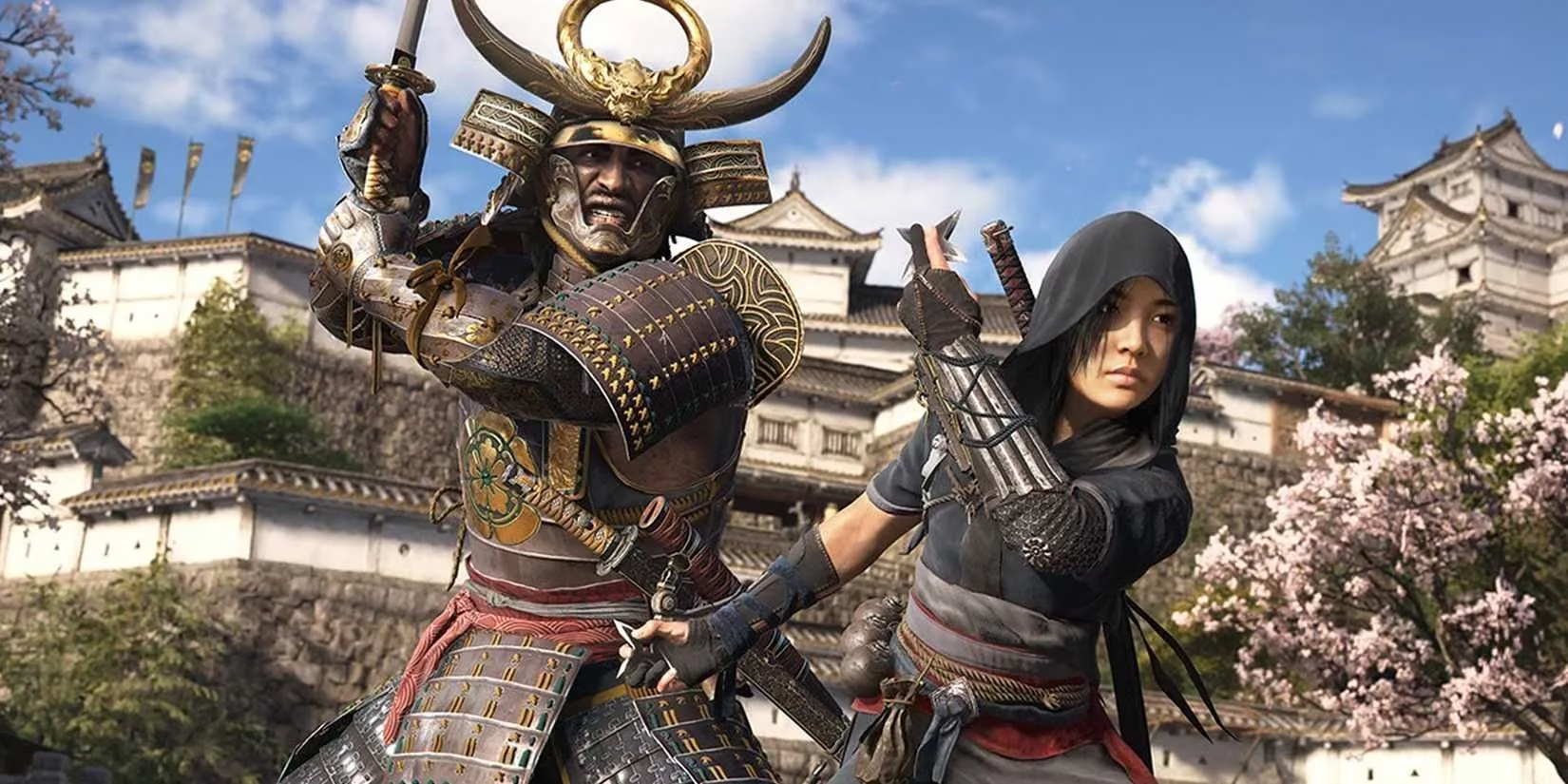
This dichotomy means players might have a clear favorite but are sometimes restricted to playing one character for specific missions, forcing them to adapt their playstyle. It's a genius way to ensure players experience both facets of the game's combat and exploration philosophy.
The Balancing Act: Is the Spotlight Shared Equally?
Now, here's the rub, the elephant in the dojo, if you will. Despite Yasuke's crucial role, the game's narrative and mechanics feel heavily skewed in favor of Naoe. She's often the focal point of the story and, crucially, has access to the full trifecta of classic Assassin's Creed gameplay: Stealth, Parkour, and Combat. Yasuke, by design, is mostly locked into the Combat pillar. This has led to some criticism that the samurai fantasy feels slightly less fleshed out compared to the complete shinobi package Naoe offers. It's a valid point—players controlling Yasuke might sometimes feel like they're missing out on the series' iconic free-running and sneaky antics.
The Verdict: An Imperfect but Essential Duo
So, was adding Yasuke worth the trouble? Absolutely, 100%. Assassin's Creed Shadows in 2026 is a landmark title with some acknowledged issues, but it's almost impossible to imagine it without both its stars. Naoe and Yasuke aren't just two characters; they are the embodiment of a conflicted era. They provide a gameplay and narrative richness that a single protagonist could never match. Sure, the balance isn't perfect, and purists might grumble about historical liberties (the game takes a few, let's be real), but the end result is a more complete and engaging Feudal Japan fantasy. The unplanned samurai didn't just join the roster; he helped define the entire experience, proving that sometimes the best ideas are the ones you never saw coming. In the end, the duo offers a killer combo: the silence of the shinobi and the storm of the samurai. And that, folks, is how you make history—both in-game and in development lore.