I stand with Naoe and Yasuke, overlooking a valley in feudal Japan, the world of Assassin's Creed Shadows stretching out before us. The air is thick with the promise of conflict and the whispers of history, yet there is a profound quiet here that previous journeys—through the snowy wilds of Norway or the sun-drenched isles of Greece—never offered. My blade, ever ready for the corrupt samurai or the scheming Templar, rests in its sheath. For in this land, we do not raise our steel against the creatures of the forest. The frantic hunt for boar hide to reinforce a bracer, the chase for wolf fangs to trade for coin, these rhythms of survival from Odyssey and Valhalla have fallen silent. This is not an oversight, but a deliberate, almost spiritual, design.
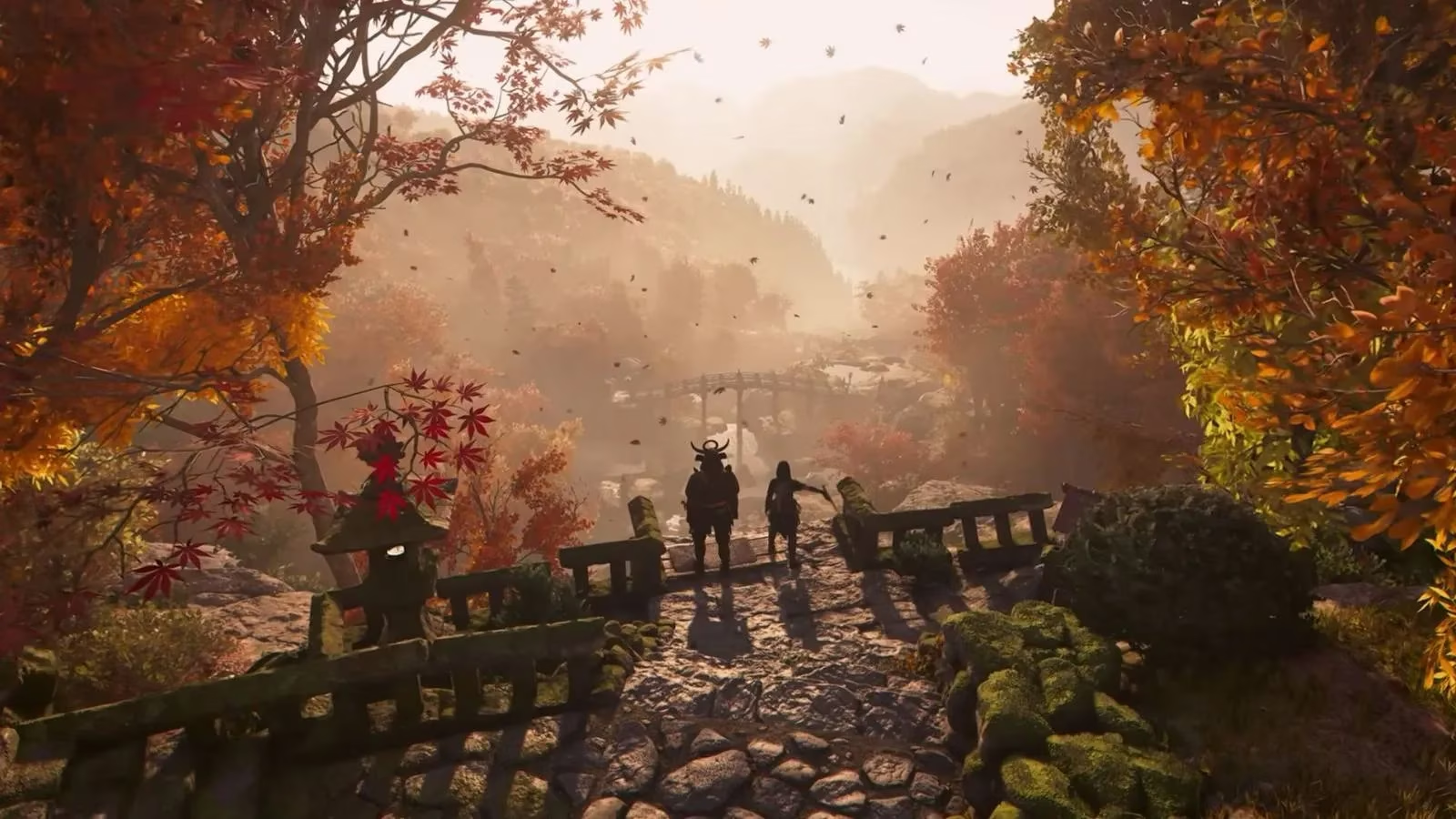
The director of this world, Charles Dumont, recently illuminated the path that led us here. The decision to remove hunting—to make wildlife entirely inviolable—was born first from a deep respect for the setting itself. When the developers immersed themselves in the ecology of 16th-century Japan, they discovered a landscape distinct from the untamed frontiers of other eras. The islands lacked the proliferation of large, aggressive megafauna that traditionally served as combat challenges or resource pools in open-world games. Instead of forcing a conflict that felt alien to the environment, the team saw greater beauty and authenticity in invitation: an invitation to simply observe. To watch the red-crowned crane dance in a misty marsh, to see the sika deer move like shadows through the bamboo grove, became a richer interaction than any predator-prey dynamic could provide.
This choice resonates with a second, deeper philosophy woven into the fabric of Shadows. Dumont spoke of a desire to seed the open world with "zen-like" activities. In a narrative centered on the brutal clash of ideologies and the intimate violence of the shinobi, balance was essential. The relentless pursuit and slaughter of animals is, as he noted, "about as far from zen as you can possibly get." So, they cultivated spaces for contemplation. Imagine these moments interspersed between missions:
-
🍃 Sitting by a koi pond, the rhythmic swirl of orange and white fish clearing the mind before a night infiltration.
-
🎋 Listening to the wind in a pine tree, a practice known as shinrin-yoku (forest bathing), restoring a sense of calm.
-
✍️ Finding a quiet shrine to meditate, the sounds of the forest replacing the usual hustle of a quest hub.
"We wanted to incorporate world activities that offer a zen-like experience," Dumont explained, "providing spiritual or contemplative moments in nature to balance Naoe and Yasuke’s journey." The violence we enact is not lessened, but its weight is felt more acutely because it exists in counterpoint to these pockets of profound peace. The game does not judge the hunter's way of past adventures, but for Shadows, it simply "made sense" to let the wild things be.
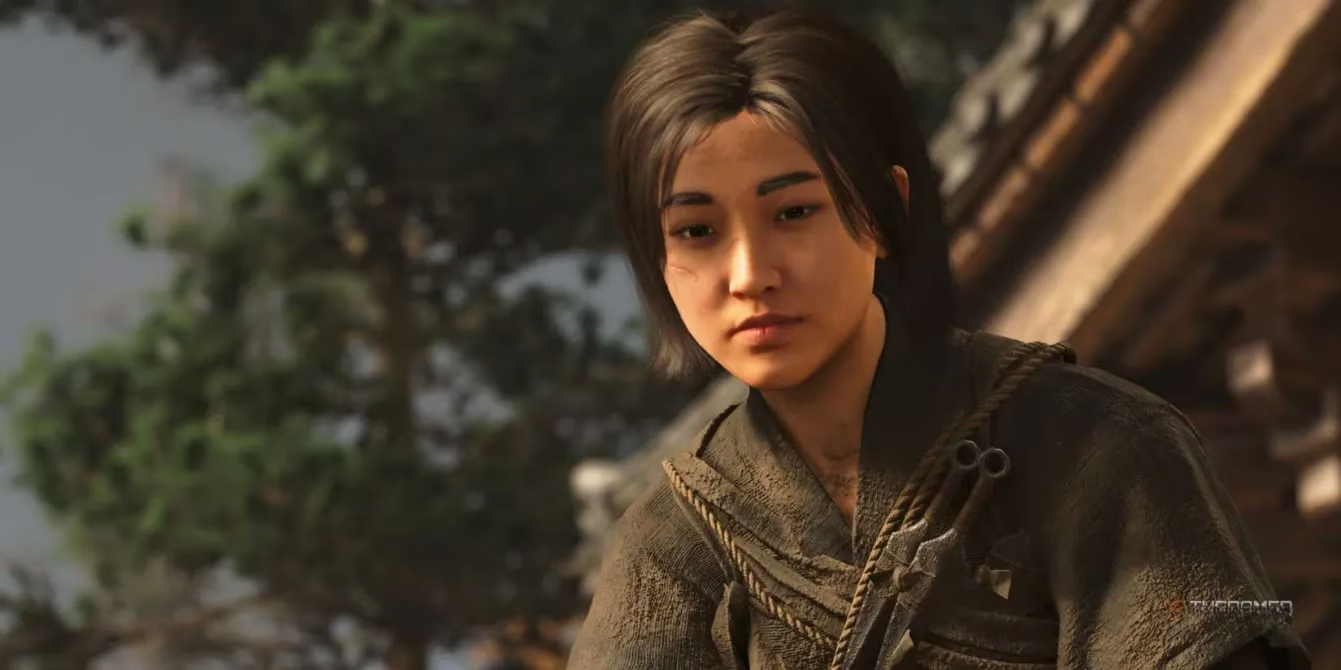
For players like me, who once found a strange solace in the systematic harvest of the wild, this initially felt like a loss. A part of the classic RPG loop—gather, craft, upgrade—seemed absent. Yet, playing in this new space, I've found the compensation is far greater. The world feels more alive, more sacred, and my role within it more defined. I am an assassin, a warrior, a disruptor of human corruption, not a force of ecological imbalance. The resources for my gear now come from the forged steel of enemy camps, the silks of merchant convoys, and the secrets of ancient tombs. The progression is no longer tied to the blood of beasts, but to the flow of history and conflict.
And what of the future? Will we ever again stalk digital elk or fend off virtual bear attacks in an Assassin's Creed title? Dumont assures us this is not a permanent edict. The return of hunting rests firmly on the twin pillars of "setting and player fantasy." The grim, folklore-infused horrors hinted at for Assassin's Creed Hexe would naturally call for a different relationship with the natural world, one possibly filled with perilous creatures born of superstition and fear. The key is harmony. The mechanic must serve the fantasy of the place.
So, as I prepare to dive back into the shadows of Azuchi-Momoyama Japan, I sheathe my blade not just for the human guards, but as a promise to the world itself. The journey of Naoe and Yasuke is one of steel and silence, of conflict and contemplation. In removing the option to harm, Ubisoft has not taken something away. They have given us a deeper way to belong. We are not conquerors of this landscape, but fleeting participants within its ancient, breathing tapestry. The greatest stealth mission, it turns out, is not moving unseen through an enemy castle, but moving through a forest without leaving a wound behind.