Let’s be real—Assassin’s Creed has never been a dusty history textbook, and thank goodness for that. I mean, where would Ezio be without Leonardo da Vinci whipping him up a new Hidden Blade? The series loves to weave real historical figures into its wild, parkour-filled narratives, and Assassin’s Creed Shadows is no slouch in that department. Set in the chaotic late Sengoku period of Japan, the game throws you into a world crawling with daimyos, shinobi, and enough political backstabbing to make your head spin. One of the most jaw-dropping appearances comes right at the story’s climax: Hattori Hanzo, the legendary samurai with the nickname “Demon Hanzo.” Buckle up, because his arc is a rollercoaster of loyalty, jealousy, and a last-minute shot at redemption that will leave you staring at the screen long after the credits roll.
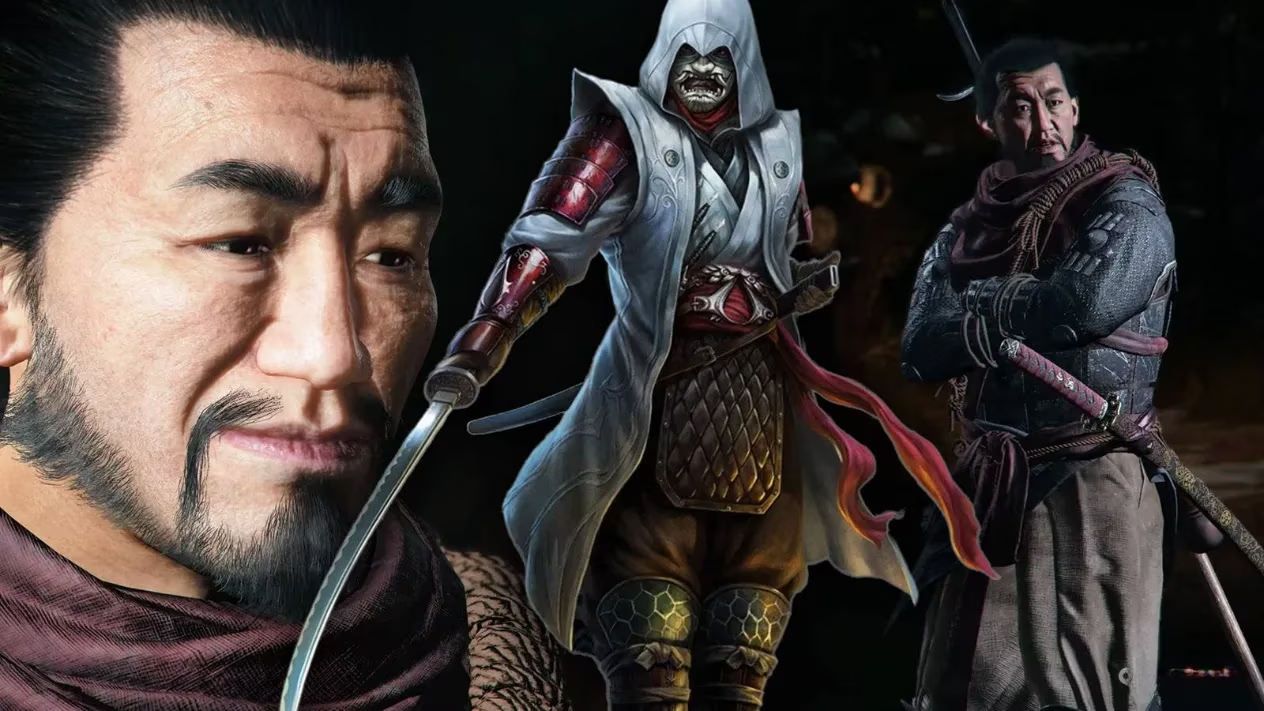
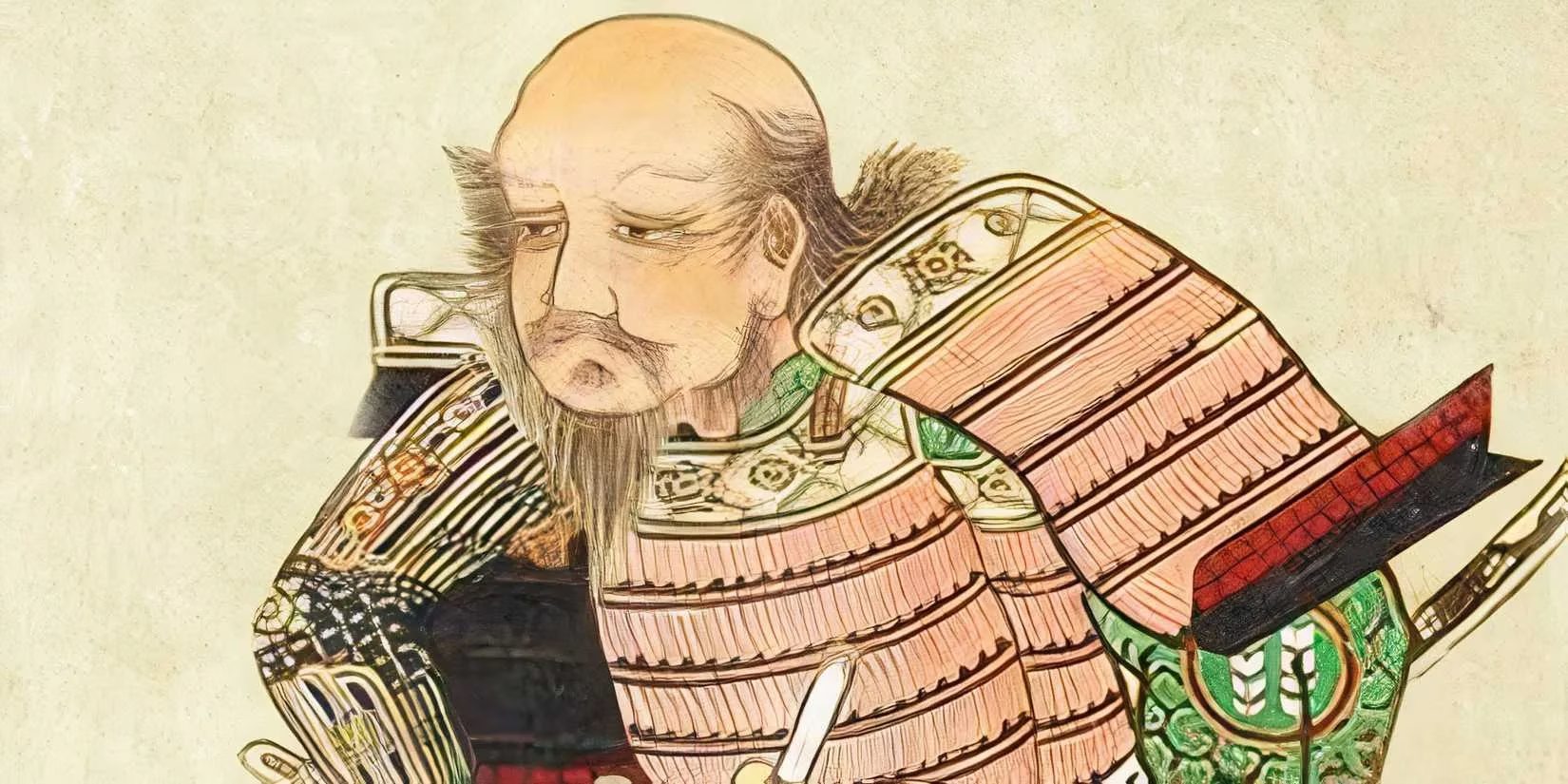
Before we dive into the game’s juicy plot, let’s set the stage with a little history—because the real Hattori Hanzo was just as fascinating as his virtual counterpart. Born in the early 1540s as the son of a samurai from a ninja clan, Hanzo saw his first battle at the ripe age of 15, talk about a tough childhood! By the time he was around 20, he was serving under Tokugawa Ieyasu, the daimyo who would eventually become the shogun of a unified Japan. Hanzo’s specialty? Covert ops. He rescued Ieyasu’s family from the Imagawa clan, squashed a rebellion in Mikawa, and basically became Ieyasu’s right-hand shadow. His tactical genius and sheer tenacity earned him the nickname “Hanzo the Demon” during the 1570s, a moniker that sent shivers down the spines of his enemies. When Oda Nobunaga was betrayed and killed by his own general Akechi Mitsuhide in 1582, it was Hanzo who led Tokugawa Ieyasu on a harrowing escape through Iga Province, fending off outlaw samurai hunters known as Ochimusha-gari. The guy remained loyal to Ieyasu until his death from illness in 1597, cementing his legend as one of the future shogun’s “divine” generals. So, what happens when you drop this larger-than-life figure into the Assassin’s Creed universe? Pure drama.
In Assassin’s Creed Shadows, Hattori Hanzo isn’t just a cameo—he’s the pivot point for the entire climax. You’ll hear his name whispered early on, but his grand entrance doesn’t happen until the story’s final act, and boy, does he bring the heat. As you dig deeper, you learn that Hanzo was once an apprentice under Momochi Sandayu and a member of the Kakushiba ikki, a splinter faction of Assassins founded by Spanish Assassin Alvaro Catarribera and his protégé Tsuyu. So far, so good, right? Wrong. Here’s where it gets gnarly: Hanzo had a major crush on Tsuyu, but she chose to marry Nagato instead. Cue the green-eyed monster. In a moment of spectacular pettiness, Hanzo betrayed the entire Kakushiba ikki, selling them out to Ashikaga Yoshiaki. This single act of jealousy brought down the Assassin group and set the stage for decades of heartache.
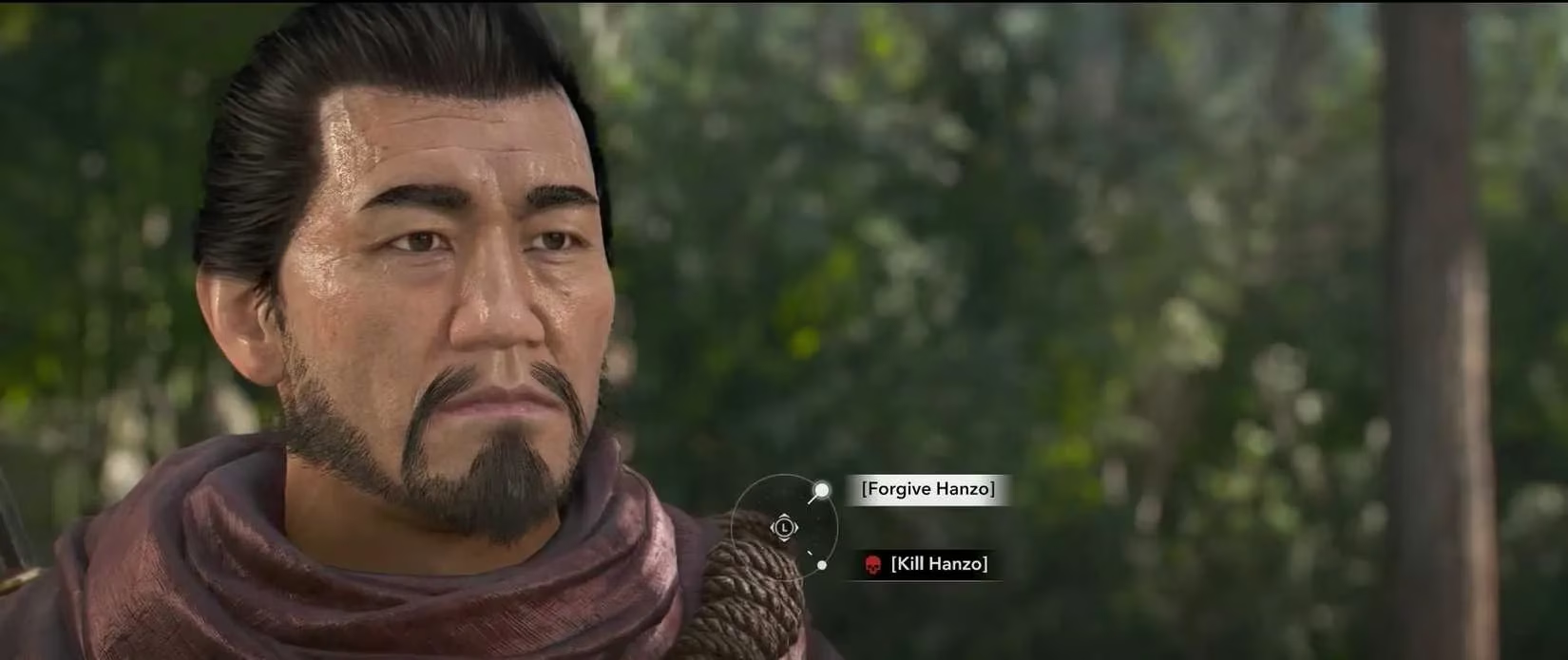
Fast-forward to the canon ending, and Hanzo finally confesses his betrayal to Naoe, our fierce shinobi protagonist. Naturally, Naoe doesn’t take the news well—she lunges at him, blades flashing, and honestly, I was ready to cheer her on. But then something unexpected happens. Naoe gains the upper hand and, instead of delivering a killing blow, she stops. She forgives the man who wrecked her family’s legacy. I’ve got to admit, that moment hit me right in the feels. The scene wraps up with Hanzo and Naoe agreeing to work together to find Tsuyu, who Hanzo believes might still be alive. It’s a testament to the game’s writing that you can go from wanting to throttle the guy to genuinely rooting for this odd couple to succeed. That’s the Assassin’s Creed magic—making historical figures feel like flawed, complex people you could argue with over a bowl of ramen.
Now, if you’re an OG fan like me, you might remember that this isn’t the first time Hattori Hanzo has popped up in the franchise. Way back in 2014, Ubisoft released a mobile card battler called Assassin’s Creed: Memories, where Hanzo played a pretty wild role. According to that game’s lore, Hanzo reclaimed the Sword of Eden in the 1570s, assassinated the Japanese Templar Mochizuki Chiyome in the 1590s, and met his end at the hands of his rival Fumo Kotaro in 1596. For years, fans have debated whether any of this is still canon. Since Assassin’s Creed Shadows takes place in the early 1580s, there’s wiggle room for those events to still fit, but Ubisoft has been pretty tight-lipped about it. Honestly? I’m crossing my fingers for a DLC or comic that bridges the gap—because a dying Hanzo facing off against Kotaro after his redemption arc in Shadows would be absolutely epic.
Playing through Shadows in 2026, a year after its release, I’m still blown away by how the game handles historical characters like Hanzo. It doesn’t treat them as museum exhibits; it drags them into the messy, morally gray world of Assassins and Templars and says, “Live with the consequences.” Hanzo’s journey from jealous traitor to remorseful ally is a masterclass in storytelling—it keeps you on your toes and reminds you that even “Demons” can find a shot at grace. If you haven’t experienced this tale yet, do yourself a favor and dive in. Just remember: forgiveness might be a virtue, but never trust a samurai with a broken heart without keeping your Hidden Blade handy. 😉