Looking back from the vantage point of 2026, it's almost quaint to think about how we first met Connor Kenway. I remember booting up Assassin's Creed 3 back in the day, expecting another suave, charismatic hero in the vein of Ezio. What I got instead was Ratonhnhaké:ton—a man of few words, immense conviction, and a legacy so tangled in family drama it could rival any modern soap opera. Born 270 years ago in 1756, this half-Mohawk, half-British warrior wasn't just another ancestor in Desmond Miles's genetic memory playlist; he was the final, crucial piece of the puzzle, the one whose life would echo through centuries to shape the very fate of the Assassin Brotherhood. His story, a blend of personal tragedy and monumental historical upheaval, remains one of the franchise's most compelling and, frankly, underrated sagas.
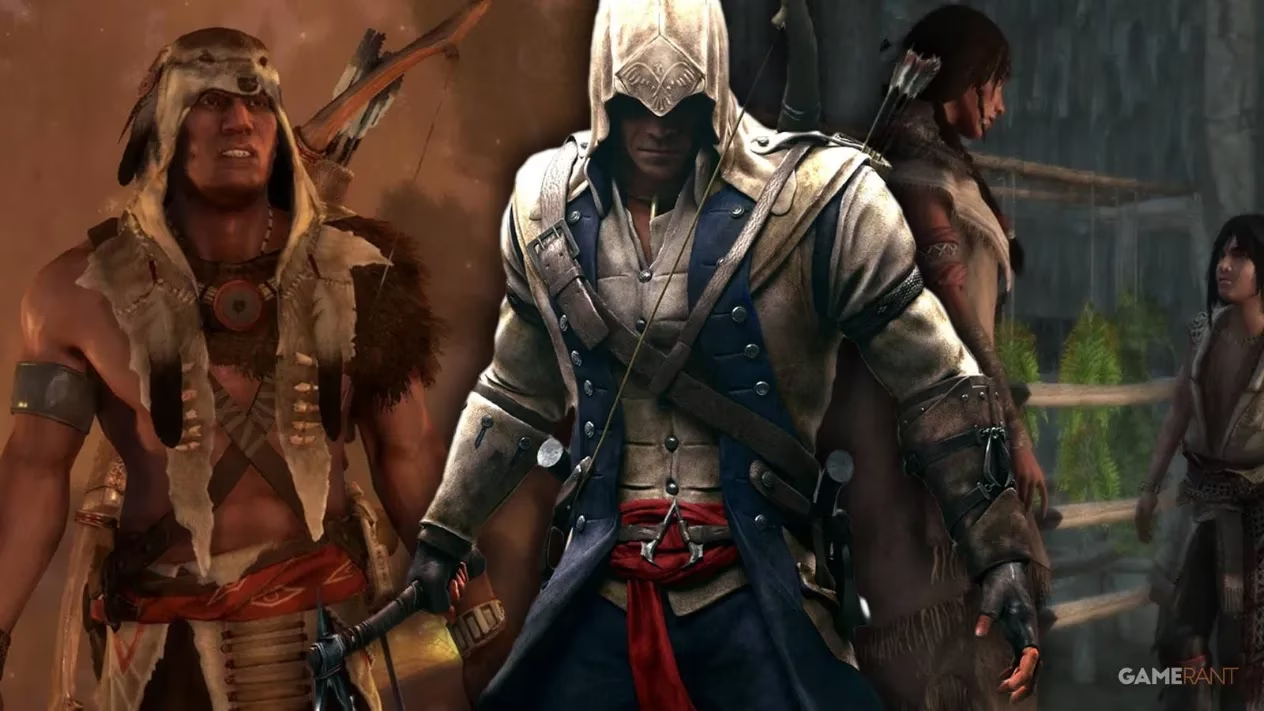
A Heritage of Contradictions and Conflict
Let's talk about family baggage. Connor's lineage is the stuff of legend—and I mean that literally. Descended from the legendary Altair and the beloved Ezio, he's also the grandfather of the modern-day Assassin Desmond Miles. But his immediate family? That's where the plot thickens into a tragic stew. The game's genius—and my initial shock—came from playing not as Connor, but as his father, Haytham Kenway. And what a twist that was! Here I was, embodying this charming, eloquent gentleman, only to have the rug pulled out from under me when he was revealed as the Grand Master of the Colonial Templars. Playing as the antagonist was a narrative masterstroke that set the tone for Connor's entire life: a constant battle against the very blood that runs in his veins.
Haytham's brief alliance and romance with Connor's mother, the formidable Mohawk warrior Kaniehti꞉io (Ziio), was a fleeting moment of unity against a common foe. Yet, it sowed the seeds for a lifetime of conflict. Orphaned young after his mother's death, Connor's path was forged in fire and vengeance. His journey to the grizzled, disillusioned Mentor Achilles Davenport wasn't just about learning to wield a hidden blade; it was a pilgrimage for purpose. The revelation of his paternity—that his father was the Templar leader he was sworn to destroy—must have been a soul-crushing blow. Their eventual confrontations weren't just battles of steel, but agonizing debates over ideology, freedom, and control. Forcing Connor to ultimately assassinate Haytham remains one of the most morally complex and heartbreaking moments in the series.
The Architect of a Brotherhood Reborn
Beyond the familial melodrama, Connor was a builder. He wasn't just an assassin; he was a community leader, a naval commander, and a mentor. His restoration of the Aquila wasn't a side activity—it was a declaration of independence. With Captain Robert Faulkner's help, that ship became a symbol of hope, a mobile fortress for trade, naval combat, and connecting with allies like the incredible Aveline de Grandpré in Louisiana.
His true legacy, however, is etched into the land of the Davenport Homestead. Through those homestead missions, I didn't just gather resources; I built a haven. I helped people like:
-
Deborah "Dobby" Carter, the resilient innkeeper.
-
Stephane Chapheau, the lovelorn lumberman.
-
Jamie Colley, the gruff but kind miner.
-
Duncan Little, the paranoid tailor.
This wasn't busywork. It was nation-building on a micro scale. Connor trained these everyday colonists, these downtrodden souls, and forged them into a new generation of Assassins. He didn't just fight for American independence; he fought to ensure that the freedom won would be guarded by a reborn Brotherhood. His direct aid to figures like George Washington (even saving him from an Apple of Eden-induced nightmare in The Tyranny of King Washington) shows he helped shape the foundation of a nation, all while knowing that same nation would later betray his people.
The Enigmatic Twilight Years and Lasting Impact
So, what happened after the credits rolled? The games leave us hanging, but expanded lore paints a picture of a man forever shaped by his struggles. We know he read his father's journals, seeking to understand the man he had to kill (Assassin's Creed: Forsaken). He continued leading the Colonial Brotherhood, even recruiting new members like Patience Gibbs. And in a beautiful, poignant detail from Assassin's Creed: Reflections, we learn he found a measure of peace. He married, had three daughters, and one, Io:nhiote, inherited the precious Eagle Vision, presumably carrying the bloodline directly to Desmond Miles.
His death date remains a mystery, lost to the annals of history, but his impact is undeniable. Let's break it down:
| Legacy Aspect | Impact on the Assassin's Creed Universe |
|---|---|
| Genetic Lineage | Direct ancestor of Desmond Miles; his actions were vital for the 2012 salvation event. |
| Brotherhood Revival | Rebuilt the Colonial Rite from ashes, creating a lasting institution. |
| Narrative Diversity | First major Native American protagonist, paving the way for characters like Bayek, Kassandra, and the protagonists of Shadows. |
| Gameplay Innovation | Introduced full-scale naval combat and homestead management, defining mechanics for future titles. |
Connor was divisive at launch—too serious, too different from Ezio. But time has been kind to him. In an era where we crave complex, morally grounded heroes, Connor stands tall. He wasn't fighting for glory or revenge alone; he fought for a principle: that all people deserve to be free. His stoicism wasn't a lack of personality; it was the weight of the world on his shoulders. He ensured the Templars didn't dominate the nascent United States, and by extension, the world. In 2026, as we explore new histories, we owe a debt to the guardian who stood in the forge of revolution and hammered out a future for the Brotherhood. His creed, forged in personal loss and unwavering resolve, endures. ✊