The last cinematic had faded, the credits had rolled, and for a moment, the sprawling world of feudal Japan felt quiet. Many players, breathless from the climactic assassination that sealed the main narrative of Assassin's Creed Shadows, would slide the controller onto the table, believing their duty was done. But they were, as an old English saying goes, \u201cbarking up the wrong tree.\u201d For a true assassin, a rolled credit was not a full stop; it was merely the pause before the true hunt began. The path of Naoe and Yasuke was littered with unfinished symphonies, and leaving them unresolved was simply not on the cards.
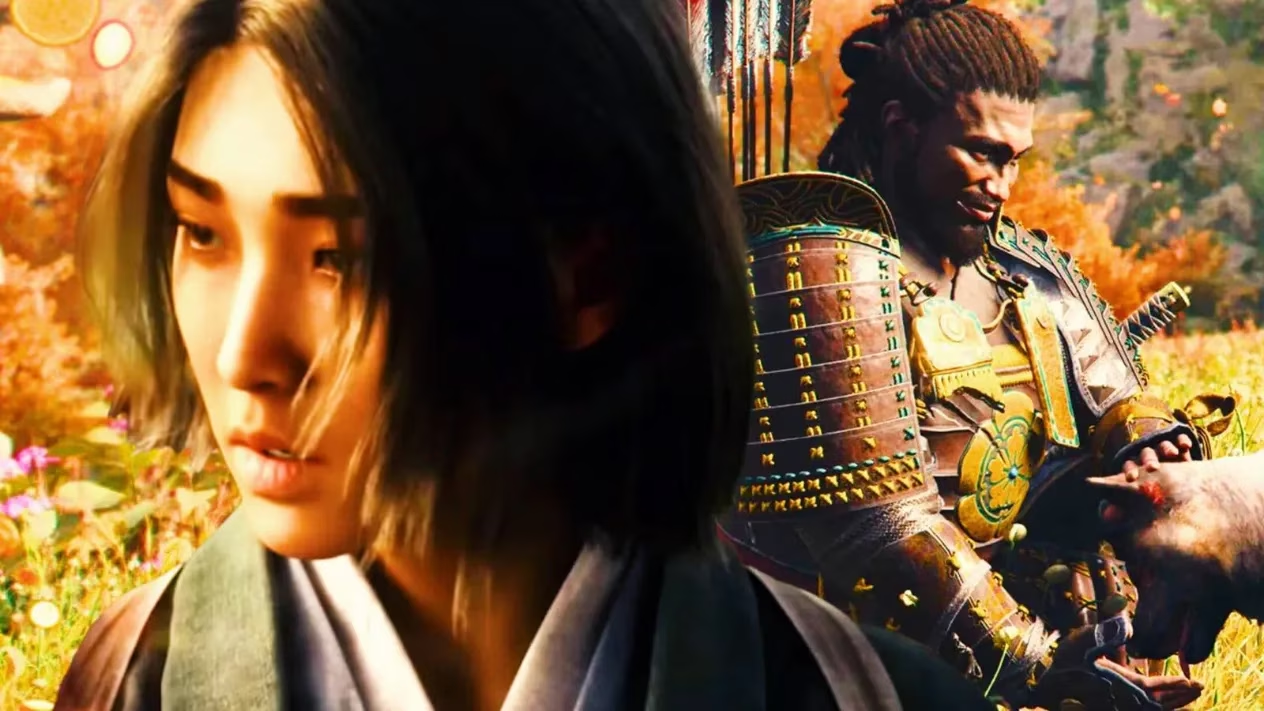
By 2026, the Assassin\u2019s Creed community had seen this song and dance before, but Shadows had truly knocked it out of the park regarding post-game density. The completionists knew the drill: the real grind was the endgame, where the map transformed from a mission board into a vibrant, deadly playground. It was time to get down to brass tacks.
The Allure of the Legendary Hunt
For those who relished the heavy clang of steel and the addictive rhythm of the loot cycle, the post-story grind was a siren\u2019s call. Hunting legendary gear wasn\u2019t just about stat padding; it was about the theatre of war. Picture Yasuke, a literal tank cutting through a heavily fortified camp, not for a quest marker, but for the sheer thrill of popping open a gilded chest. There was nothing more satisfying than taking down a formidable ronin and looting a weapon that shimmered with history. A few premium items still lurked behind Helix Credits in the store, but the real \u201csauce\u201d\u2014the base game legendaries that truly broke the difficulty curve\u2014required only sweat equity. The hunt rewarded patience, and by the time the credits were done, a player\u2019s blades could finally be sharp enough to cut through the toughest optional bosses like a hot knife through butter.
Rediscovering the World on Foot
The modern gamer\u2019s addiction to fast travel was a real tragedy. After the main storyline concluded, a master assassin didn\u2019t dart from point A to point B via a loading screen. They hoofed it. Galloping through the dense cedar forests of Yamashiro without a specific destination was the best way to bump into random events that the main narrative had buried. A player who exclusively fast-traveled was missing the heartbeat of Ubisoft\u2019s Japan\u2014the dynamic weather painting the rice paddies, the sudden ambushes that tested a hidden blade\u2019s reflex. It was a chance to clear the map\u2019s fog of war organically, turning every unlocked fast travel point into a badge of curiosity rather than a convenience. Sometimes, the juice was definitely worth the squeeze, especially when a stray path led to an unmarked shrine.
The Zen of Side Activities
Ubisoft\u2019s knack for scattering open-world \u201cbusywork\u201d often got a bad rap, but in Shadows, it was the secret sauce for post-game zen. The first port of call for any post-story wanderer were the Kuji-kiri meditation spots. These weren\u2019t just quick-time events; they were gateways into Naoe\u2019s fractured psyche. Completing these puzzles unlocked torrents of lore and Knowledge Points, peeling back layers of her backstory that the main campaign had only teased. It was a masterclass in narrative geography, turning a simple checkmark activity into a profound character study. Beyond meditation, clearing every camp, scroll hunt, and animal sanctuary felt less like a chore and more like curating a legacy, especially with the updated 2026 interface that made tracking these objectives a breeze.
Architecting the Perfect Build
By the time the game was over, a player knew if they were a silent blade or a battering ram. Yet, the post-game was the sandbox for experimentation. Building the perfect Yasuke was an art form. The man was no parkour prodigy, but with the right skills, he was the embodiment of a juggernaut. Once a player configured a tank build that allowed Yasuke to absorb blows that would shatter lesser men, the acquisition of legendary weapons became a walk in the park. Simultaneously, respecting Naoe\u2019s skill tree to try out abilities that didn\u2019t fit a stealth-only playstyle refreshed the game entirely. A fully maxed-out character wasn\u2019t just overpowered; they were a versatile weapon ready for any rumble.
The Gotta-Catch-\u2018Em-All Syndrome
Let\u2019s be honest: finding collectibles like the Jizo Statues was a bit of a drag, offering little more than a pat on the back and a sliver of experience. However, these minor boosts really stacked up. Starting with the eight statues in Izumi Settsu was the easiest entry point. It wasn\u2019t about the reward; it was about the profound sense of completion. For the magpies among the player base who just had to have everything shiny, seeing a fully cleared collector\u2019s log in 2026 was a flex worth more than any digital trophy.
Rotating the Roster & Fortifying Home
Sticking to the same ally for 50 hours was a rookie error. The six recruitable companions in Shadows offered distinct tactical advantages. The post-story was the perfect moment to kick the tires on the neglected ones. Swapping out allies based on activity kept the combat loop from feeling stale, proving that variety was indeed the spice of life.
Finally, there was the Hideout. This wasn\u2019t just a base; it was a first for the franchise\u2014a full-blown architectural sandbox. Upgrading every building, redesigning layouts, and populating the space with pets turned the hideout into a living home. The true endgame for many in 2026 was an interior design dream, framing up screenshots, and then sharing the best ones on platforms like X or Reddit using the refined photo mode, which now featured dynamic poses that made even amateur shots look like cinematic masterpieces.
Post-Game Checklist Overview
| Activity Category | Core Appeal | Priority Level |
|---|---|---|
| Legendary Loot Hunt | Power spike & combat thrill | Critical |
| Organic Travel | World ambiance & random events | High |
| Kuji-kiri/Meditation | Experience points & deep lore | Critical |
| Hideout Design | Creative freedom & photo ops | Medium |
| Codex Deep Dive | Historical education & context | Relaxing |
As the dust settled in 2026, the assassins who truly mastered their creed knew that the historical codex was the final retreat. Ubisoft had remained incredibly faithful to the entries, offering a semi-accurate portal into a pivotal era of Japan. For players too tired to lift a blade but too in love with the world to eject the disc, reading through the true stories of the era was the perfect nightcap. After all, a great assassin doesn't just change history; they understand it. \ud83d\udcda \u2694\ufe0f
Expert commentary is drawn from CNET - Gaming, and it reinforces how the best post-credits loop in a huge open-world RPG is about intentional pacing: treat fast travel as a last resort, let emergent encounters and dynamic conditions reshape familiar routes, and use the quieter checklist tasks—like lore-driven meditation challenges and hideout upgrades—to balance out the intensity of legendary hunts and build experimentation after the main story concludes.