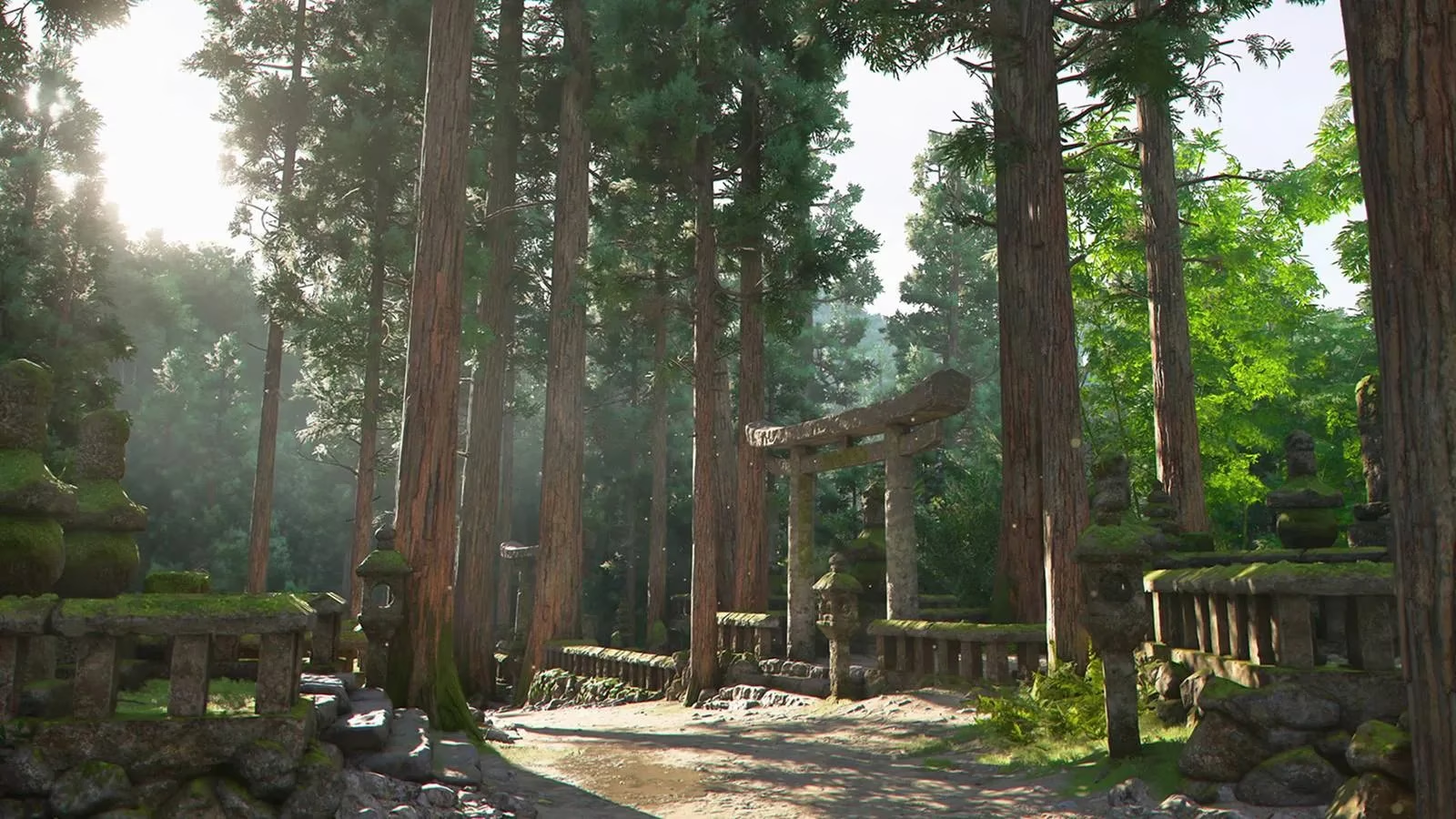
Since its release, Assassin's Creed Shadows has managed to capture the imagination of players around the world. While its long-awaited journey to feudal Japan and its expanded RPG framework have drawn plenty of attention, one particular feature continues to stand out in 2026: the dynamic seasonal system. This is not just a cosmetic gimmick. It has become a core part of the gameplay loop, shaping each playthrough in ways that previous entries only hinted at.
Let’s be honest, watching the world shift from lush green to snow-covered silence never gets old. In Assassin's Creed Shadows, the seasons do more than change the scenery—they breathe life into the open world and keep players on their toes.
From Two Seasons to Four: A Long Road
The last time seasons played a significant role in the franchise was in Assassin's Creed 3. Back then, Ubisoft introduced a simplified two-season system: summer and winter. During summer, the game played much like earlier titles, with occasional fog or rain adding texture. In winter, the land was coated in thick snow. This reduced visibility, which helped improve stealth, and Connor had to trek through large snow drifts, leaving a visible path wherever he went. These seasonal changes were tied to the story, and after finishing the main campaign, players could switch between summer and winter at will.
While this feature added a touch of realism, Ubisoft chose not to significantly expand upon it in later entries. Weather effects carried over to future open-world games, and certain areas featured snow or rain, but true seasonal transitions disappeared. For years, fans wondered if seasons would ever return in a meaningful way. Assassin's Creed Shadows finally answered that question.
How the Seasonal Engine Works
Assassin's Creed Shadows has taken the concept of seasons and turned it into something far more ambitious. Each season is split into two resets, which occur after a set amount of in-game time has passed. The first reset happens at the middle of a season, while the second occurs at the end. The main difference is that the second reset ushers in an entirely new season.
With every reset, several systems refresh. Players receive resources for their hideout, their scouts and map areas reset, and new contracts appear. Alerts and local factions also refresh. This creates a largely clean slate, allowing players to reassess their approach and engage with the world from a fresh perspective. It is a clever way to keep the experience feeling dynamic without forcing players to start over.
The aesthetic changes are just as impressive. Each of the four seasons brings its own unique visual identity. The colors of the leaves shift, vegetation dies or regrows, animals emerge or retreat, and traversal can even be affected by the changing environment. Seasons also introduce new hazards, hiding spots, and seasonal exclusive content. Honestly, it feels like the environment finally has a pulse.
A Living World That Reacts
What makes the seasonal system in Assassin's Creed Shadows so compelling is how it blends realism with gameplay. The world does not simply change color; it changes the rules. A path that was easy to cross in summer might become treacherous in winter. A hiding spot that worked in autumn may no longer be available in spring. This forces players to adapt their tactics and pay attention to the environment in a way that has rarely been seen in the series.
The table below highlights just how far the seasonal system has come.
| Feature | Assassin's Creed 3 | Assassin's Creed Shadows |
|---|---|---|
| Number of seasons | Two (summer, winter) | Four complete seasons |
| Gameplay impact | Reduced visibility, snow drifts, stealth improvements | Resource resets, new contracts, hazards, hiding spots, traversal changes |
| Seasonal control | Story-driven with post-game manual switching | Automatic time-based cycle with two resets per season |
| Seasonal content | Limited cosmetic and environmental changes | Exclusive seasonal content and refreshed map activities |
| World reactivity | Mostly visual with some stealth benefits | Deeply integrated into core gameplay loop |
🌿❄️🌸🍂
As 2026 continues, the seasonal rhythm has become one of the most talked-about aspects of the game. Players frequently highlight how a simple change in weather can transform an entire mission, turning a straightforward infiltration into a tense game of patience. That kind of depth is rare in open-world titles, and it sets a high bar for future entries.
Why Seasons Should Stay
Injecting this type of seasonal system into Assassin's Creed Shadows has made the entire experience far more lifelike. It is gripping to watch the land change and have the shifting weather actually affect how the game is played. Many players have noted that the world feels more alive than it has in years, and a large part of that comes from this feature.
Now that Ubisoft has reintroduced seasons and made them a core pillar of the franchise, the hope is that the studio has no plans to move away from them again. The dynamic seasons in Assassin's Creed Shadows are not just a nostalgic callback to Assassin's Creed 3; they are a meaningful evolution that could shape the future of the series. If future titles build on this foundation, players can look forward to open worlds that react, adapt, and surprise them in ways that feel remarkably human.
That is, after all, what makes an open world worth exploring.