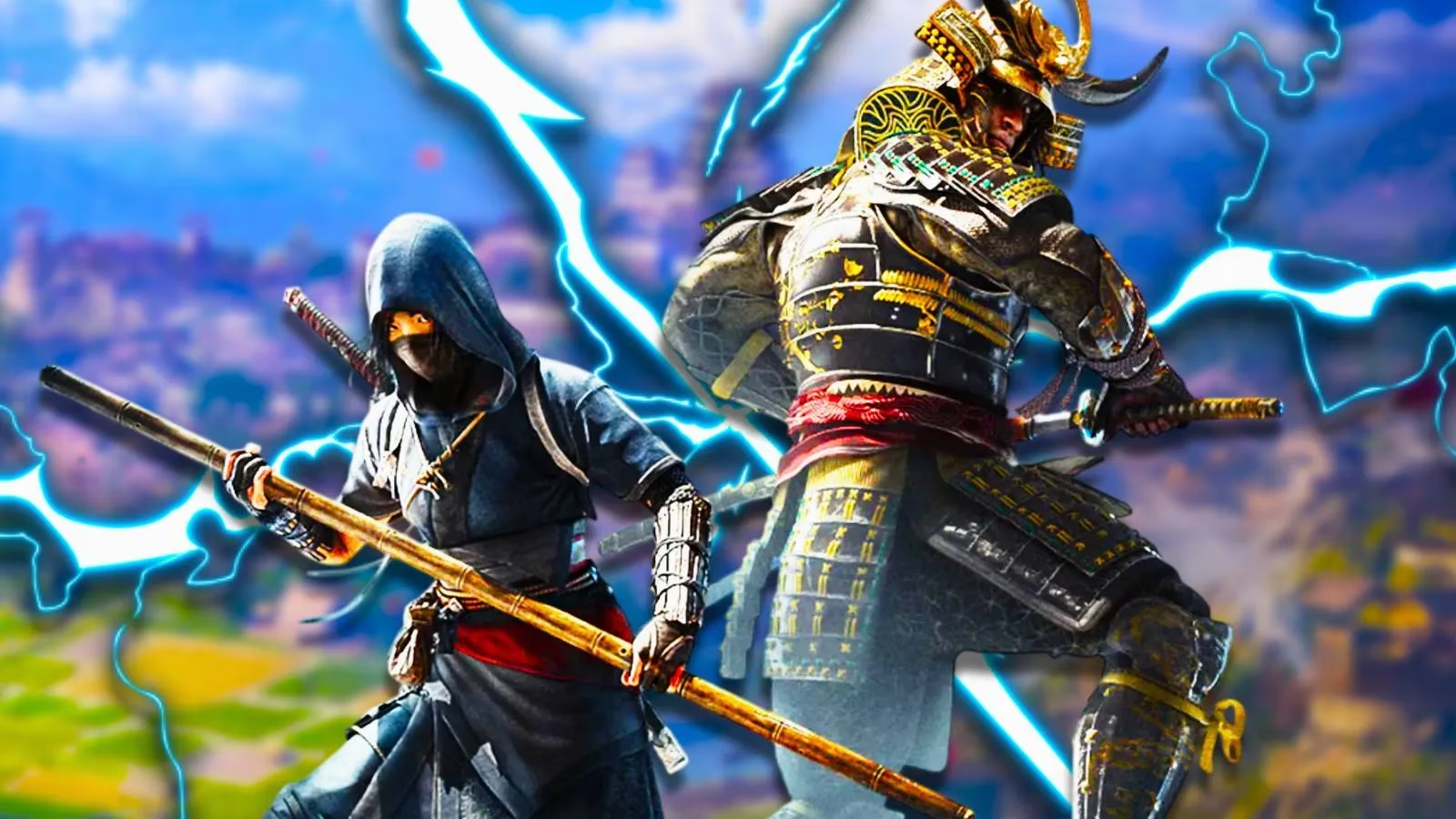
As 2026 unfolds, the gaming landscape continues to evolve, yet certain design conversations remain timeless. Looking back at Assassin's Creed Shadows, one can't help but appreciate its ambitious vision while simultaneously lamenting its unrealized potential. The game, set in a breathtaking Feudal Japan, delivered a visually stunning sandbox and introduced two compelling protagonists—Naoe and Yasuke. Their chemistry, fueled by talented voice actors, created moments of genuine connection. However, for all its grandeur, Shadows stumbled in weaving these characters' bond into the very fabric of gameplay, particularly during the long stretches of exploration that define the open-world experience. It's a classic case of 'so close, yet so far'—a game with the pieces for greatness that never quite assembled them into a cohesive, immersive whole.
The Protagonist Paradox: Together, Yet Apart 🎭
One of Shadows' most touted features was its dual protagonists. On paper, Naoe and Yasuke promised a dynamic narrative partnership. Their on-screen moments, especially during cutscenes and key story beats, were indeed phenomenal. The voice actors' real-world chemistry translated into believable, heartfelt interactions that made players invested in their unbreakable bond. The problem? This bond largely existed in isolation from the core gameplay loop. For a game built around two main characters, an astonishing amount of playtime was spent with them physically separated. Narrative excuses were occasionally provided, but the disconnect was palpable. It felt like watching two compelling characters in separate movies that only occasionally intersected. This wasn't a new issue for Ubisoft—Assassin's Creed Syndicate suffered similarly—but in Shadows, with its emphasis on partnership, the missed opportunity stung more.
The Empty Journey: Exploration as a Chore, Not an Adventure 🗺️
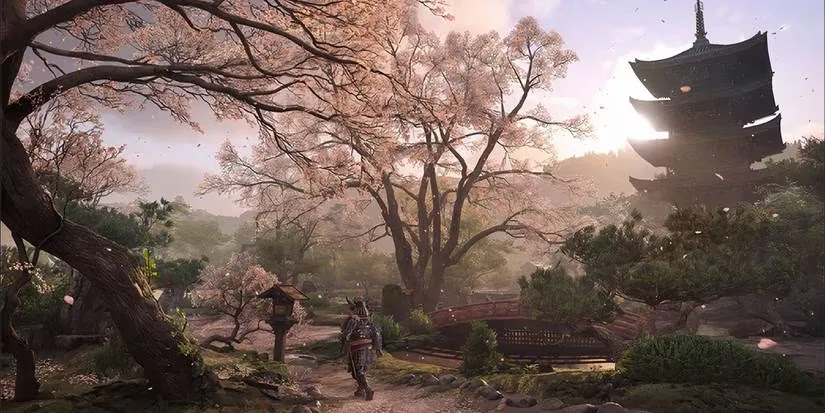
Let's talk about the elephant in the room: traversal. Assassin's Creed Shadows' world is vast and beautiful, no doubt. From serene temples to bustling villages, the art team knocked it out of the park. But beauty alone doesn't sustain engagement. The journey from point A to point B often felt like a slog. The movement options lacked uniqueness, and the world, while pretty, could feel surprisingly empty during transit. Players were left with a binary choice: endure a monotonous trek or fast-travel and miss the scenery entirely. This is where the game's biggest weakness—exploration—clashed with its greatest narrative strength—the protagonists' relationship. The solution seemed obvious: merge the two.
The 'What If': Travel as a Narrative Tool ✨
Imagine this alternative scenario. Instead of Naoe or Yasuke magically appearing at a mission start "as if they'd been waiting in the wings," they actually traveled with you. We're not talking about a full-blown, AI-controlled companion system for the entire game (though that would have been awesome). We're suggesting something simpler and more elegant: using travel downtime for character development. While riding across the Japanese countryside or navigating dense forests, the protagonists could have conversed. These conversations could have covered:
-
Backstory and Lore: Sharing personal histories, fears, and dreams.
-
Mission Banter: Discussing strategy, past events, or upcoming challenges.
-
Philosophical Debates: Reflecting on the nature of their creed, duty, and the changing world.
This approach has been masterfully executed in other titles. Think of the campfire chats in Red Dead Redemption 2 that made the Van der Linde gang feel like a family, or the organic party banter in classic BioWare games. It transforms travel from a chore into an opportunity for connection. For Shadows, this would have killed three birds with one stone:
-
Enhanced Character Bond: We'd see more of Naoe and Yasuke's relationship in a natural, gameplay-integrated way.
-
Improved Exploration: The journey itself becomes engaging and something to look forward to.
-
Reduced Fast-Travel Reliance: Players might think twice about skipping the scenic route if it meant missing unique dialogue.
A Lesson for Open-World Design Beyond 2026 🎮
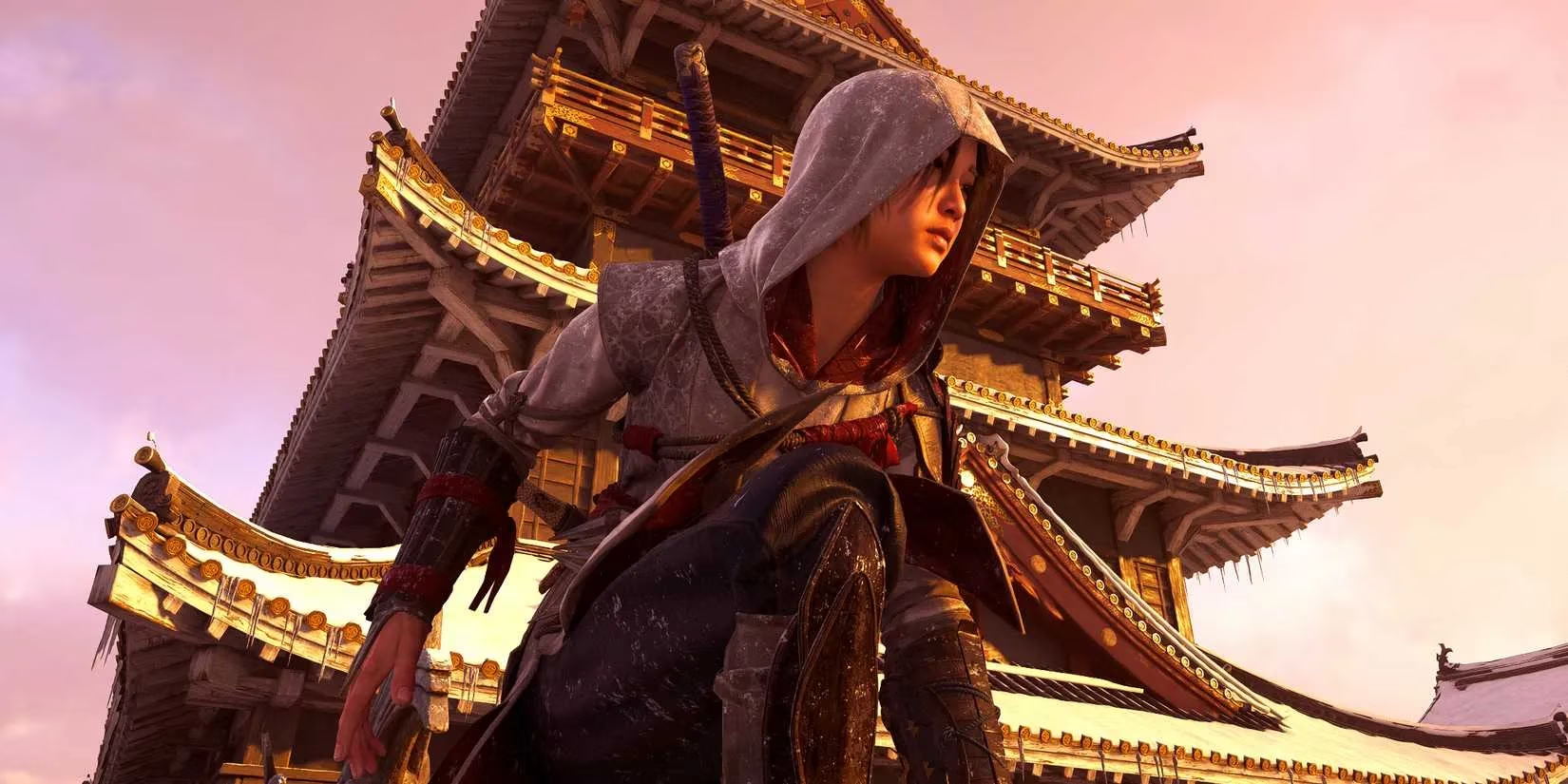
The issue of boring traversal isn't unique to Assassin's Creed Shadows; it's an industry-wide challenge. Developers often rely on environmental distractions—random encounters, collectibles, scenic vistas—to pad the journey. Games like The Legend of Zelda: Breath of the Wild and Ghost of Tsushima did this well with their emergent events and atmospheric exploration. But even these can become repetitive. After your tenth predictable Yiga Clan ambush or Mongol patrol, the magic fades.
The more sustainable solution, especially for narrative-heavy games, is to make the journey meaningful through character and story. It's a more efficient use of the player's time and the developer's resources. Instead of creating a hundred shallow distractions, create a few dozen deep, character-driven conversations that trigger during travel. This approach builds a stronger emotional investment in the world and its inhabitants.
| Game | Traversal Strength | How Shadows Could Have Learned |
|---|---|---|
| Red Dead Redemption 2 | Campfire stories, horse-ride conversations | Use travel for organic character development. |
| Mass Effect Legendary Edition | Normandy shipboard dialogues | Let protagonists debrief and bond between missions. |
| Death Stranding | Curated music and solitude for reflection | Acknowledge the journey's length and use it for tone. |
Final Verdict: A Good Game That Could Have Been Legendary ⚔️
In the end, Assassin's Creed Shadows was a solid entry with a lot of heart. Its setting was to die for, and the core story of Naoe and Yasuke had genuine moments of brilliance. But by failing to integrate its protagonists' relationship into the gameplay's most repetitive aspect—travel—it missed a golden opportunity to create a truly immersive and emotionally resonant experience. It's a lesson for the future: in open-world games, the space between the objectives shouldn't be empty space; it should be narrative space. For the next chapter in the franchise, one can only hope Ubisoft takes this feedback on board. After all, what's the point of creating unforgettable characters if we don't get to spend meaningful time with them on the road? Here's hoping the next adventure makes the journey just as important as the destination. 🤞