As someone who loves both history and stealth-action games, I found Assassin's Creed Shadows especially fun to dig into because it drops Naoe and Yasuke into one of the messiest, most fascinating periods of Japanese history: the Sengoku era. The game mixes real people with fictional drama, and honestly, that blend is part of the appeal. If you are like me and keep pausing to ask, “Wait, was this person real?” then this guide should help. Just a quick warning: there are story spoilers ahead for Assassin's Creed Shadows. 🥷
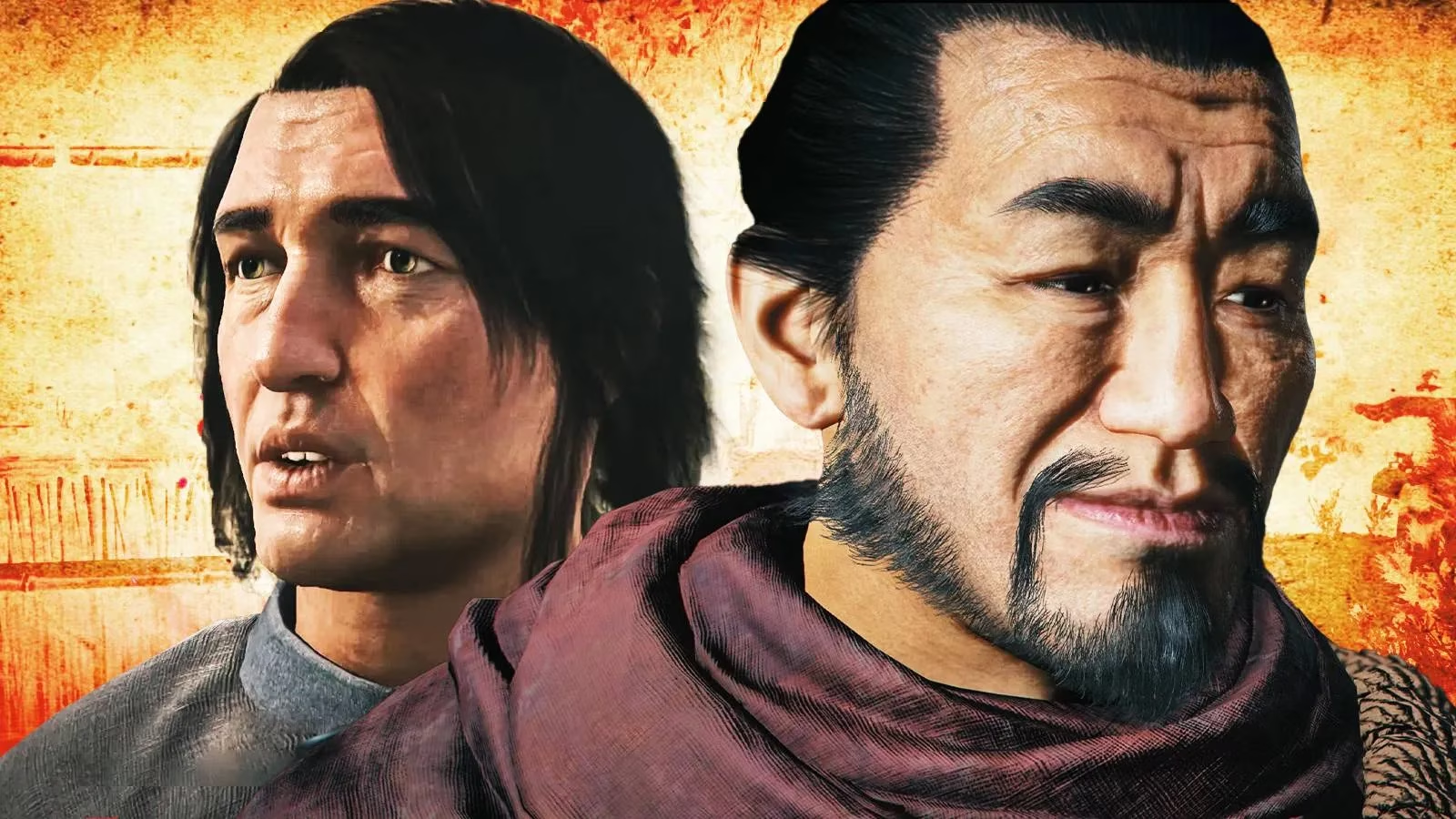
What I appreciate most in 2026 is how the game gives us a doorway into the politics of the time. The main story alone hints at alliances, betrayals, and the slow collapse of older power structures. But because Shadows aggressively mixes fact and fiction, it can be hard to track who is who. So here is my player-friendly overview of the major historical figures, what the game does with them, and where creative license takes over. 📜
| Figure | Why They Matter | How Shadows Uses Them |
|---|---|---|
| Yasuke | An African retainer brought to Japan by Jesuit Alessandro Valignano and taken into Oda Nobunaga's service | A rare recorded historical protagonist; present at the Honnō-ji Incident and later given fictional room to grow |
| Oda Nobunaga | A daimyo who pushed hard to unify Japan and overthrew the shogunate in 1573 | Defines the early story and is tied to Naoe's revenge quest |
| Alessandro Valignano | Italian Jesuit and major missionary figure in Asia | Brings Yasuke to Japan; depicted with a somewhat supercilious attitude |
| Luís Fróis | Portuguese Jesuit and one of the best sources on Yasuke | Appears around early meetings and later encounters with Yasuke |
| Akechi Mitsuhide | Nobunaga's general who turned against him in 1582 | The ambush at Honnō-ji and Mitsuhide's brief, unstable power grab |
| Hashiba Hideyoshi | Also known as Toyotomi Hideyoshi; the second “Great Unifier” | Avenges Nobunaga, with Naoe and Yasuke joining the fight |
| Ashikaga Yoshiaki | The final Ashikaga shogun, unseated by Nobunaga | Revealed as the ultimate leader of the Shinbakufu |
| Hattori Hanzo | Famous samurai linked to Iga shinobi and Tokugawa Ieyasu | Fictionalized ties to the Assassin Brotherhood and a bittersweet personal history |
| Tokugawa Ieyasu | Future founder of the Tokugawa Shogunate | Appears as one of Nobunaga's generals but does not dominate the story |
| Momochi Sandayu | Iga shinobi expert and teacher of Ishikawa Goemon | Given a fictional duel and encounter with Yasuke near the Honnō-ji Incident |
Yasuke is the figure I keep coming back to because he is such an unusual protagonist for this series. He was a real person brought to Japan by Alessandro Valignano, and Nobunaga took him into service as a retainer and gave him his new name. Records suggest he served close to Nobunaga, and the daimyo apparently enjoyed his company. Shadows almost certainly exaggerates his role, but that is exactly what makes him such a compelling player character. He was also present at the Honnō-ji Incident, where Nobunaga was ambushed by Akechi Mitsuhide and ultimately committed hara-kiri. Yasuke survived that event and then vanished from records, which gives the game a perfect blank page to fill. 🗡️
Oda Nobunaga himself defines the opening hours of Shadows. Starting in the 1560s, he fought other daimyo in a long push to unify Japan, and by 1573 he had overthrown the shogunate. His reputation is complicated: he was a bloody conqueror, but he also promoted the arts and left a legacy that stretches beyond pure warfare. The game leans into that complexity while using the Honnō-ji Incident as a major turning point. Nobunaga's son Nobukatsu also appears briefly in a flashback, which is a nice touch for players who like connecting the dots. ⚔️
Alessandro Valignano and Luís Fróis are the two Jesuit figures I find most interesting in this context. Valignano was an Italian Jesuit and a major missionary in Asia, and his servant Yasuke caught Nobunaga's attention. The game gives Valignano a fairly arrogant attitude, though historical scholarship suggests he was at least comparatively more interested in respecting Japanese culture than some other Jesuit leaders. Fróis, a Portuguese Jesuit, attended the initial meeting between Nobunaga and Yasuke, and he wrote about Yasuke again months after the Honnō-ji Incident. That makes him one of the best sources we have, and Shadows uses him as a believable historical anchor. ⛪
Akechi Mitsuhide is the great betrayer of the story. A former bodyguard of Ashikaga Yoshiaki, he became one of Nobunaga's most important generals during unification. Then, in 1582, he turned against Nobunaga and trapped him in a temple, where Nobunaga committed seppuku. Mitsuhide had the loyalty of many men, but his position was volatile. He could not secure support from the Imperial Court or many other daimyo, and he was dead only weeks later. Shadows shows seasons passing during his reign, but that should not be taken literally. He was unseated by Hashiba Hideyoshi and Tokugawa Ieyasu and killed by a bandit leader while fleeing, or by Naoe and Yasuke if you prefer the game's version. 😅
Hashiba Hideyoshi, later known as Toyotomi Hideyoshi, took power after Mitsuhide's short stint. His tenure was much more stable and lasted until his death in 1598, which is why he is often called the second “Great Unifier” after Nobunaga. He was born a peasant and rose to the top, which is an amazing detail on its own. His legacy was later clouded by the Imjin War, an unsuccessful invasion of Korea. In Shadows, he is tied to avenging Nobunaga, and Naoe and Yasuke naturally join that fight. 🏯
Ashikaga Yoshiaki, the final Ashikaga shogun, was unseated by Nobunaga after trying to overthrow him. He became a monk and never regained the shogunate, though he kept resisting for decades. In the game, he first appears watching a sumo match, and later he is revealed as the ultimate leader of the Shinbakufu. That fits his historical efforts to remove Nobunaga from power. Hattori Hanzo, known as the Oni no Hanzo, is another standout. He was a real samurai linked to the shinobi of Iga and served Tokugawa Ieyasu, but his connection to a splinter group of the Assassin Brotherhood is pure fiction. The game also invents his affection for Naoe's mother, which gives him a bitter, vengeful edge. 🎭
Tokugawa Ieyasu is surprisingly restrained in Shadows. After Nobunaga's death, he spent years as a rival to Hideyoshi and supported Nobukatsu for succession, but he eventually surrendered after Nobukatsu gave up. He then supported Hideyoshi while keeping a strong degree of autonomy. Despite being one of the most significant figures of the era, he mostly appears as one of Nobunaga's generals here. Momochi Sandayu rounds out the historical cast as an Iga shinobi expert and teacher of Ishikawa Goemon, a Robin Hood-like figure in Japanese history. The game puts him near the Honnō-ji Incident and gives him a fictional duel with Yasuke, even though the real Sandayu was not actually present there. 🥋
For me, the joy of Assassin's Creed Shadows is not treating it like a textbook. It is a dramatic, playable interpretation of the Sengoku period, and once you know which figures are real and where the fiction begins, the story becomes much easier to follow. In 2026, it remains a great excuse to learn a little history between stealth missions. Just remember: when the game bends the timeline, it is usually doing so for drama, not documentation. 🎮