So, here we are in 2026, and the latest leaks for Assassin's Creed Hexe are hitting me with a massive sense of déjà vu. It seems Ubisoft is once again reaching for the same old revenge narrative to kickstart Elsa's journey, a move that feels as predictable as a synchronized leap of faith from a viewpoint. As a long-time fan who's been with the Brotherhood since Altair, it's honestly a bit disheartening. The series, known for its sprawling historical sandboxes, is starting to feel like it's stuck in its own animus loop, recycling a plot device that's been worn thinner than a Hidden Blade after a hundred assassinations.
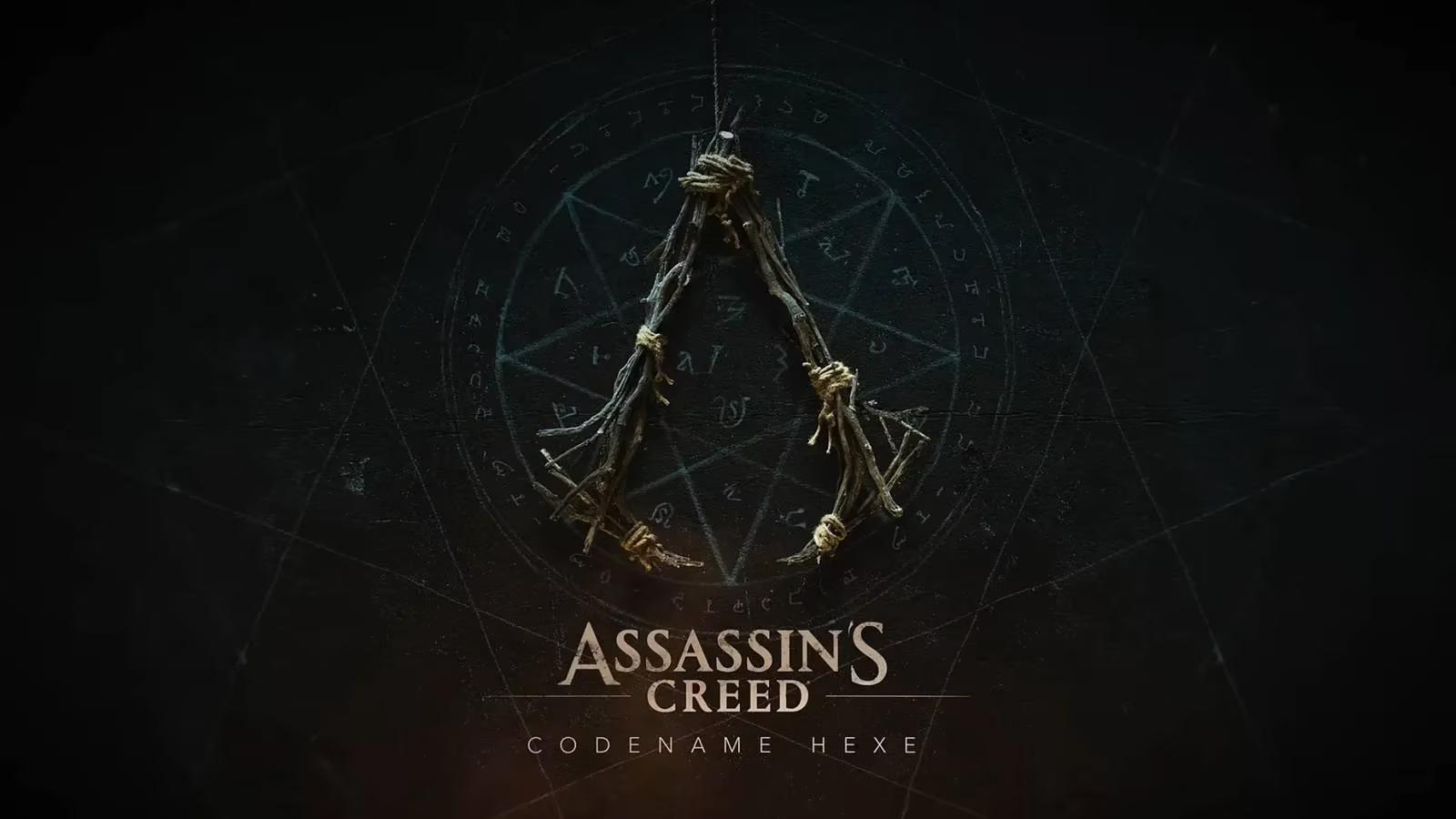
Let's rewind a bit. The revenge plot became the franchise's signature move after the phenomenal success of Ezio's saga in AC II. It was powerful, personal, and perfectly fueled his transformation. But ever since, it's become the default setting for protagonist motivation, a narrative crutch the series leans on more heavily than a parkour master on a precarious ledge. From Connor seeking justice for his village to the Frye twins avenging their father, it's a tune we've heard on repeat. Now, with Elsa rumored to lose her mother to witch-hunt accusations, it seems we're queuing up the same sad song for the dark, folklore-inspired setting of Hexe.
Why This "Revenge" Feels So Stale in 2026
The core issue isn't that revenge is a bad story. It's that in Assassin's Creed, it's become a formula as rigid as the Creed's three tenets. Based on the leaks and the series' track record, here’s what we can almost certainly expect:
-
The Inciting Tragedy: Elsa's mother is accused of witchcraft and executed. This is the spark.
-
The Oath: Grief-stricken Elsa vows vengeance, her resolve as sharp and singular as a freshly whetted blade.
-
The Convenient Mentor: She stumbles upon a wise, secretive Assassin who, breaking all logic of a clandestine order, immediately takes in this emotionally volatile stranger. This mentor is like a narrative taxi, appearing just when the plot needs to go somewhere.
-
The Fetch-Quest Grind: To get closer to her target, Elsa must help local factions, clear out enemy camps, and gather resources. The personal revenge becomes a checklist of open-world activities.
-
The Inevitable Twist: Hours later, she discovers the truth: her target wasn't the real mastermind, or is already dead, or her mentor has a shocking connection to it all. The initial goal dissolves, leaving the narrative to meander toward a less personal, more "save the world" Templar conflict.
It's a cycle that has turned what should be a raw, human emotion into a narrative algorithm. The revenge plot in modern AC often feels less like a roaring fire of passion and more like a pilot light that's been left on for a decade—persistent, but providing no real heat or transformation.
The Shining Exception: Why We Need More Stories Like Edward Kenway's
This is where my mind immediately goes to Black Flag. Edward Kenway wasn't driven by vengeance. He was a brash pirate who stumbled into the ancient conflict out of greed, ambition, and a desire for a better life. His journey was about awakening to a cause greater than himself, not being consumed by a personal loss. He joined the fray not because he had a score to settle, but because the world was bigger and more complicated than he imagined. His arc was a breath of fresh sea air, and to this day, Black Flag remains a fan favorite. It proves that a protagonist can be compelling, flawed, and deeply involved in the Assassin-Templar war without a dead relative in their backstory.
Imagine if Elsa's entry into this 16th-century German witch panic was different. What if she was a skeptic drawn into the hidden war to protect others from the very hysteria that could claim her family? What if she sought power or knowledge, and revenge was merely a secondary, complicating factor? Her story could have been a creeping vine of intrigue, slowly wrapping itself around the player, instead of a sledgehammer of tragedy in the opening act.
How Hexe Could Still Surprise Us (A Gamer's Hopeful Speculation)
Okay, let's say the revenge premise is locked in. There are ways, even within that framework, to make it feel new. Ubisoft could:
-
Subvert It Immediately: What if Elsa gets her revenge in the first act? The rest of the game deals with the hollow emptiness, the unintended consequences, and the new enemies made from that rash act. Her journey becomes one of atonement, not pursuit.
-
The Anti-Hero Twist: Make Elsa's vengeance morally grey. What if her mother was practicing dangerous, forbidden magic? What if the templars, while brutal, had a point? This could create fascinating internal conflict.
-
The 'Innocent' Assassination: The target isn't some cartoonish villain, but a genuinely complex figure Elsa grows to respect, making the final act a devastating choice rather than a triumphant checkbox.
But let's be real. Given Ubisoft's recent history of playing narrative safe with its flagship titles, this feels like wishful thinking. The safer bet is that Hexe, for all its gorgeous, gloomy atmosphere and cool witchy aesthetic, will tell a story that feels as familiar as the control scheme. Its unique setting deserves a narrative that's equally unique, not one that's been templated out like a mass-produced Hidden Blade.
In 2026, we're craving evolution. The revenge plot, unless executed with groundbreaking nuance, feels like a ghost from the franchise's past—a familiar specter we keep encountering, but one that no longer has the power to truly haunt or move us. I'll still be there on launch day, leaping from gabled rooftops into foggy forests, but a part of me will be hoping, against all odds, for Elsa to prove that her story is more than just another echo in the Animus.