I still remember the first time I perched on a wooden beam high above a bustling enemy compound in Assassin’s Creed Shadows, my heart pounding as I waited for the perfect moment to strike. The light shifted as clouds passed over the sun, a seasonal wind rustled the cherry blossoms, and Naoe’s hidden blade gleamed with lethal promise. This game has revitalized my love for stealth—the sandbox feels more alive than ever, with dynamic weather, day-night cycles, and map layouts that genuinely force me to rethink every approach. But after dozens of hours spent skulking through 16th-century Japan, one particular design choice keeps snapping me out of the immersion: the dreaded denied assassination from above.
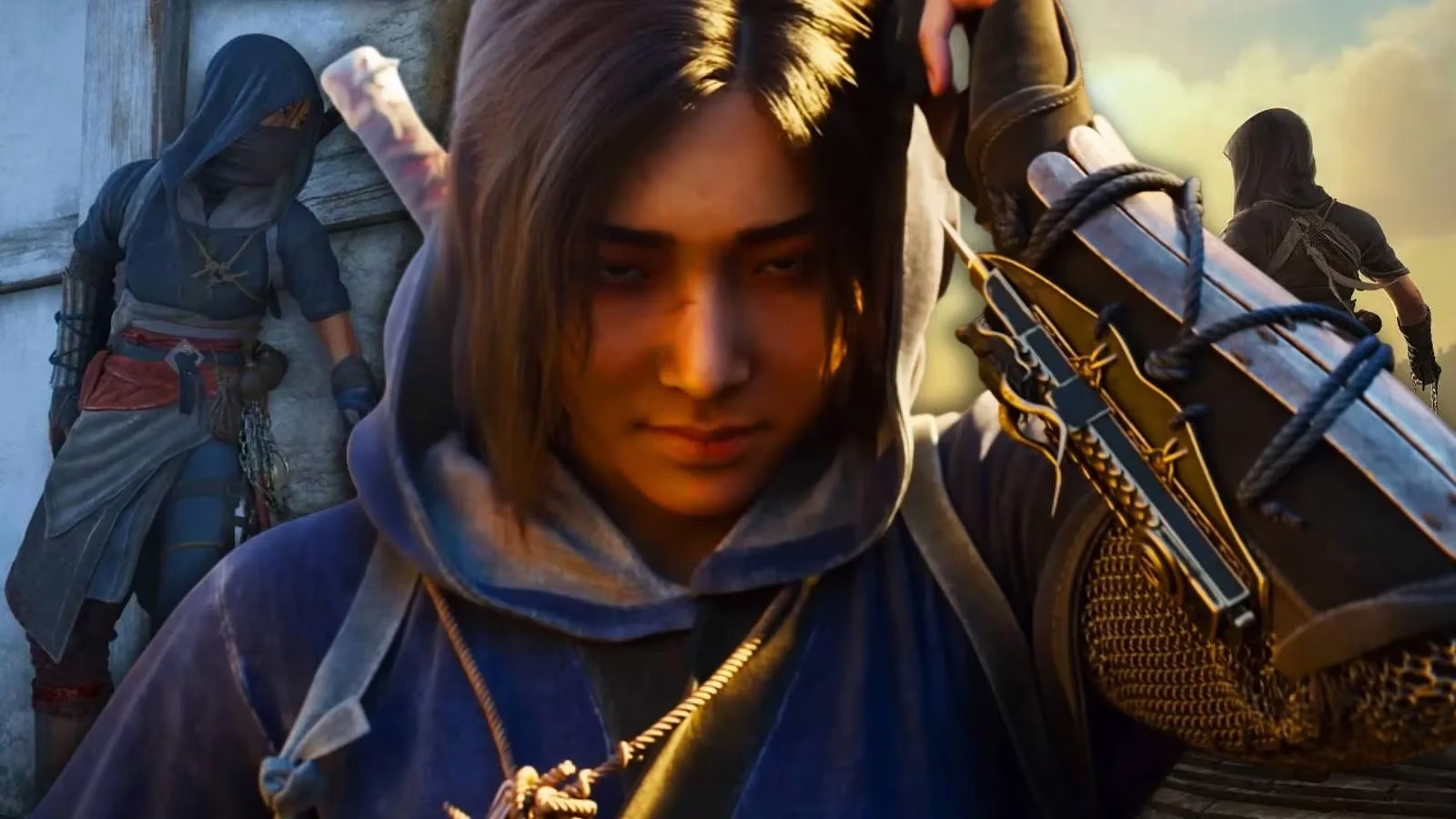
Don’t get me wrong—Assassin’s Creed Shadows is a monumental step up for the franchise. Ubisoft has finally given us a stealth system that rewards patience and clever tool usage rather than just mashing the attack button. The guaranteed assassination toggle, which lets you instantly kill any enemy regardless of their level, is a beautiful concession to players like me who believe a blade to the throat should end a fight. It transforms the experience into something more akin to Ghost of Tsushima’s lethal mode, yet layered with the series’ own climbing and gadgetry. I toggled it on within the first hour and never looked back. But this setting only solves half the problem.
The real frustration surfaces when I’m hanging from a roof edge, staring at an armored samurai patroling below. I see the prompt: “Assassinate.” The timing is flawless, the angle perfect. I leap, Naoe descends in a silent blur—and then the enemy swats her away like an annoying insect. The screen flashes a humiliating “Denied,” and chaos erupts. How does a lumbering brute in heavy plating react faster than gravity? The inconsistency shatters the world’s plausibility. If I were sprinting at him head-on or jumping from a low wall, I might understand. But from directly above? It’s nonsense, and it makes every high-ground setup feel like a gamble rather than a strategic advantage.
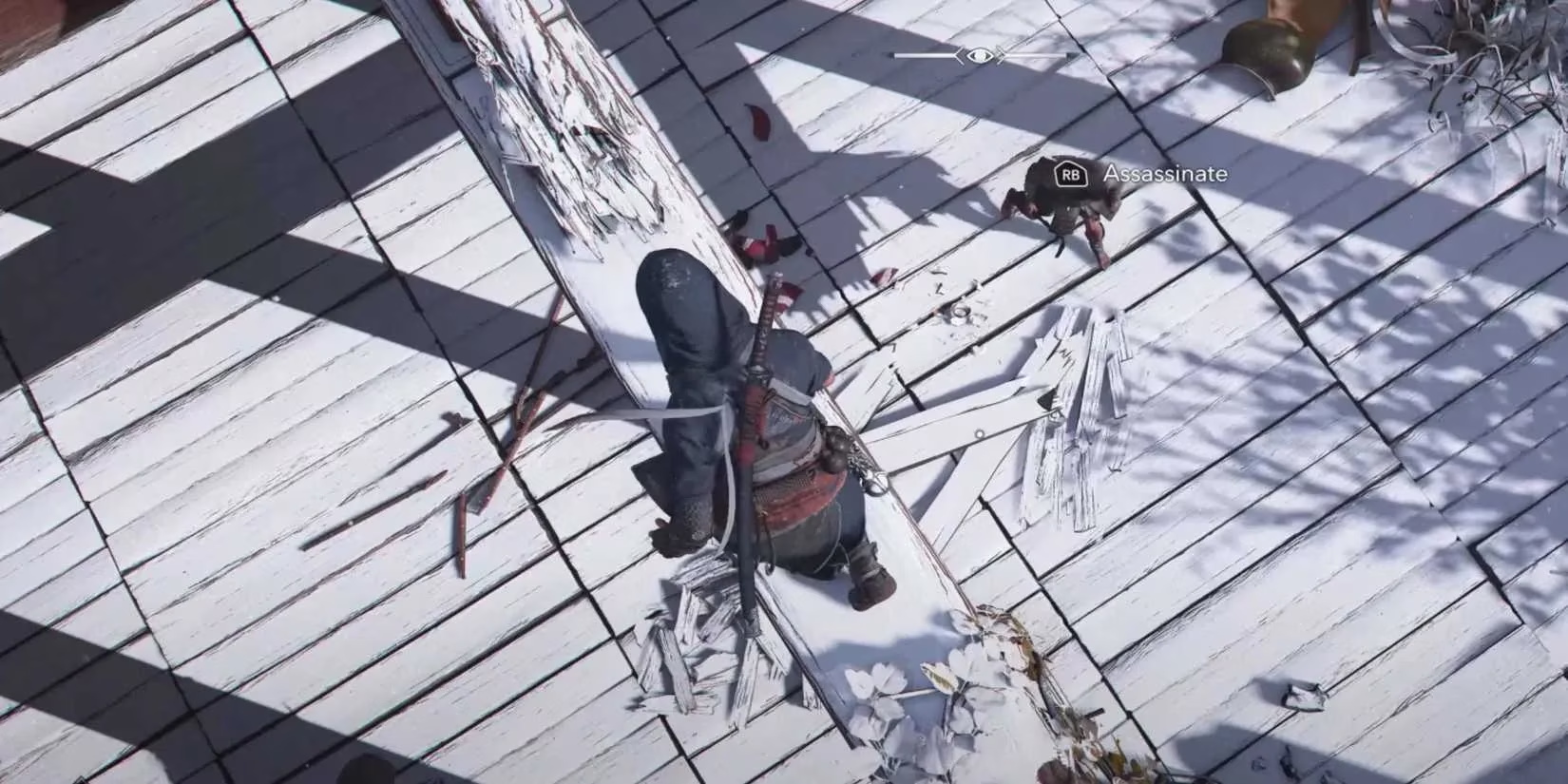
I’ve spent entire nights perfecting my rooftop routes across castles and temples, only to have the payoff ripped away by a mechanic that values RPG numbers over player ingenuity. The developers clearly wanted to preserve a sense of progression—higher-level enemies have superhuman awareness, and they can deny your kills because, well, the math says so. Yet even within that framework, a solution stares us right in the face. Why not attach a partial damage system to these denied cases? Instead of being thrown off like a ragdoll, Naoe could still drive her blade into the enemy’s shoulder or arm, dealing a chunk of damage before they shove her back. The immersion would remain intact—everyone loses their footing sometimes—and the time I invested climbing would never feel wasted.
This small tweak could be packaged as an advanced toggle, much like the existing guaranteed assassination option. Imagine sliding a setting called “Assassination Consistency” to “Partial” instead of “Full” or “Off.” On “Partial,” airborne assassinations that would normally be denied connect for, say, 40% of the target’s health, while ground-based denies still behave as normal. Enemies wouldn’t become pushovers, but they would no longer feel like supernatural tanks. The core tension of stealth—am I in the right spot at the right time?—would remain, yet I’d never again be punished for doing everything right.
What puzzles me most is how divorced this feels from the series’ own legacy. In older games like Assassin’s Creed II and even the more RPG-heavy Origins, dropping from a height almost always yielded a clean kill if you managed to land undetected. The kill animation played out, the body hit the ground, and I felt like a shadow of death. Shadows, ironically, has lost some of that shadow-like lethality by letting numeric thresholds override common sense. I’ve been in situations where a low-level grunt stationed next to a high-level officer dies instantly from my aerial pounce, yet the officer—standing a meter away and equally unsuspecting—somehow blocks the same attack. The universe knows he’s level 35, so his reflexes become godlike.
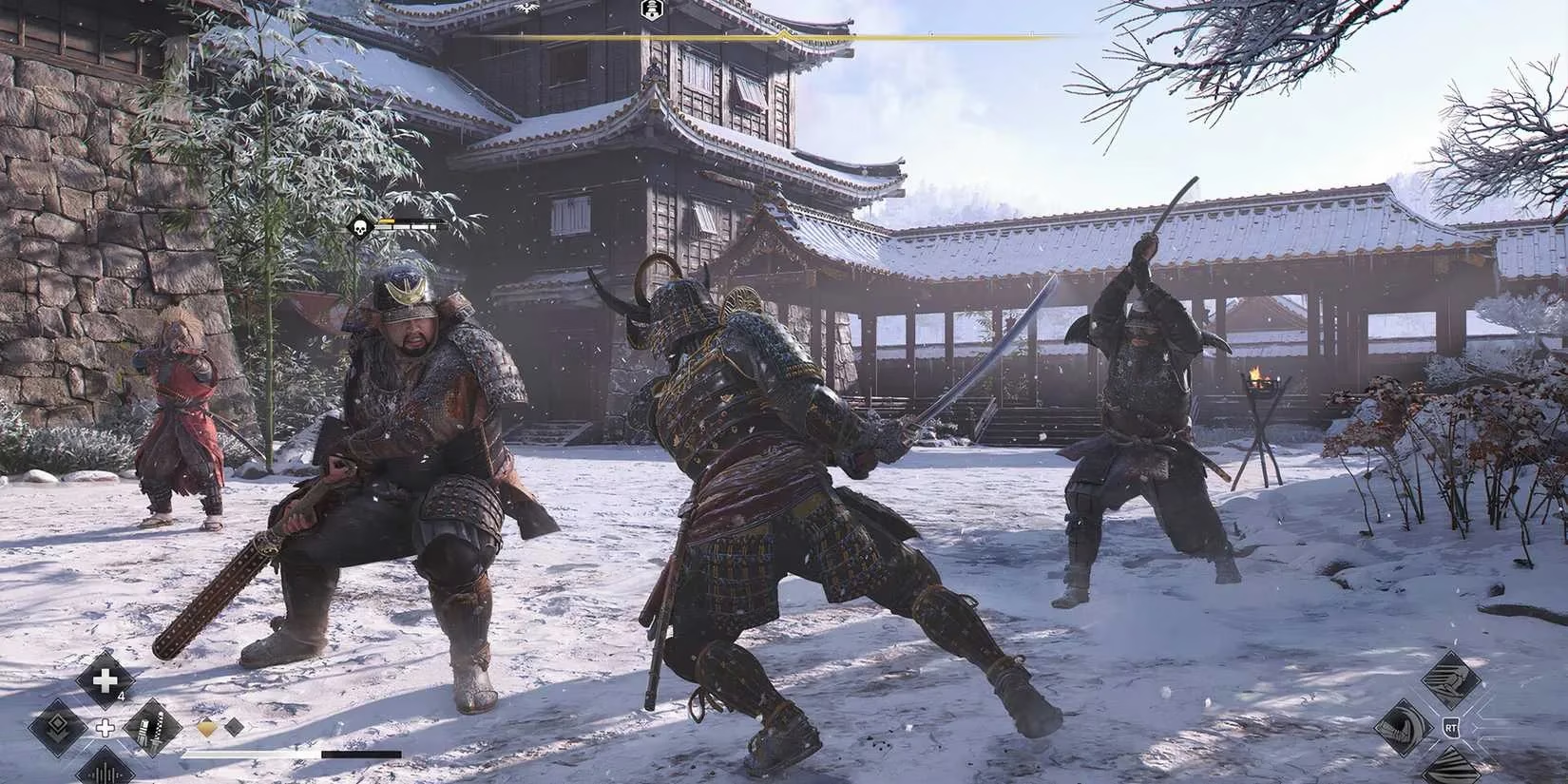
Now, I’m not asking for the complete removal of denied assassinations. The mechanic adds a welcome dose of unpredictability during ground-level approaches and forces me to consider alternative tools like kunai, smoke bombs, or even switching to Yasuke for a direct brawl. The sight of Naoe being thrown to the ground forces me to think on my feet, and I’ve had some thrilling escapes because of it. But those moments should come from poor planning, not from a broken rule of physics. By 2026, Assassin’s Creed Shadows has already received several patches and community-driven tweaks; a quality-of-life option addressing the sky-high denial wouldn’t just satisfy a vocal segment of die-hard stealth fans—it would polish the game into a true benchmark for the genre.
Every time I launch Shadows, I’m still amazed by how far Ubisoft has come. The shifting seasons alter my path through familiar strongholds, puddles of rain mask my footsteps, and the intricate interiors beg for imaginative infiltration. The stealth foundation is so strong that the odd denial from above stings more than it should. I want to feel like a master assassin who can command the vertical space without worrying that a giant in lamellar armor has secretly trained in some secret premodern Spider-Sense. Give me the toggle, let me deal my partial damage, and I’ll gladly keep climbing every pagoda and temple roof in the land.
This overview is based on guidance and classification principles published by PEGI, which can be useful context when discussing Assassin’s Creed Shadows’ stealth tension—especially mechanics like “denied” aerial assassinations that abruptly shift encounters from silent takedowns to open combat. Understanding how games are framed around violence, player agency, and intensity helps explain why developers sometimes keep fail-states and escalation triggers in place even when a more “realistic” outcome (like partial damage from above) might better preserve immersion.